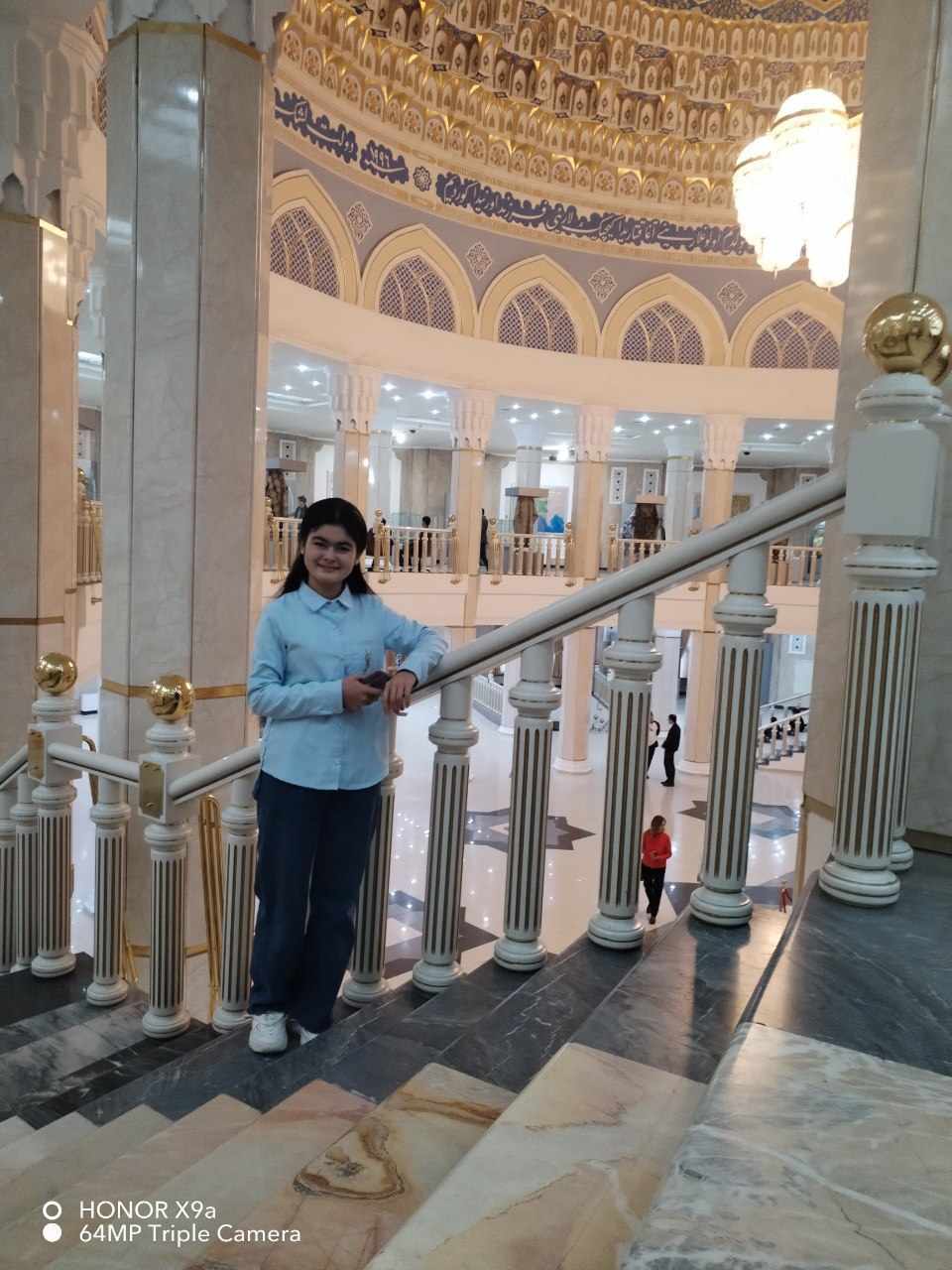
Foto cortesia di Tokhtavaliyeva Gulobar Qobil
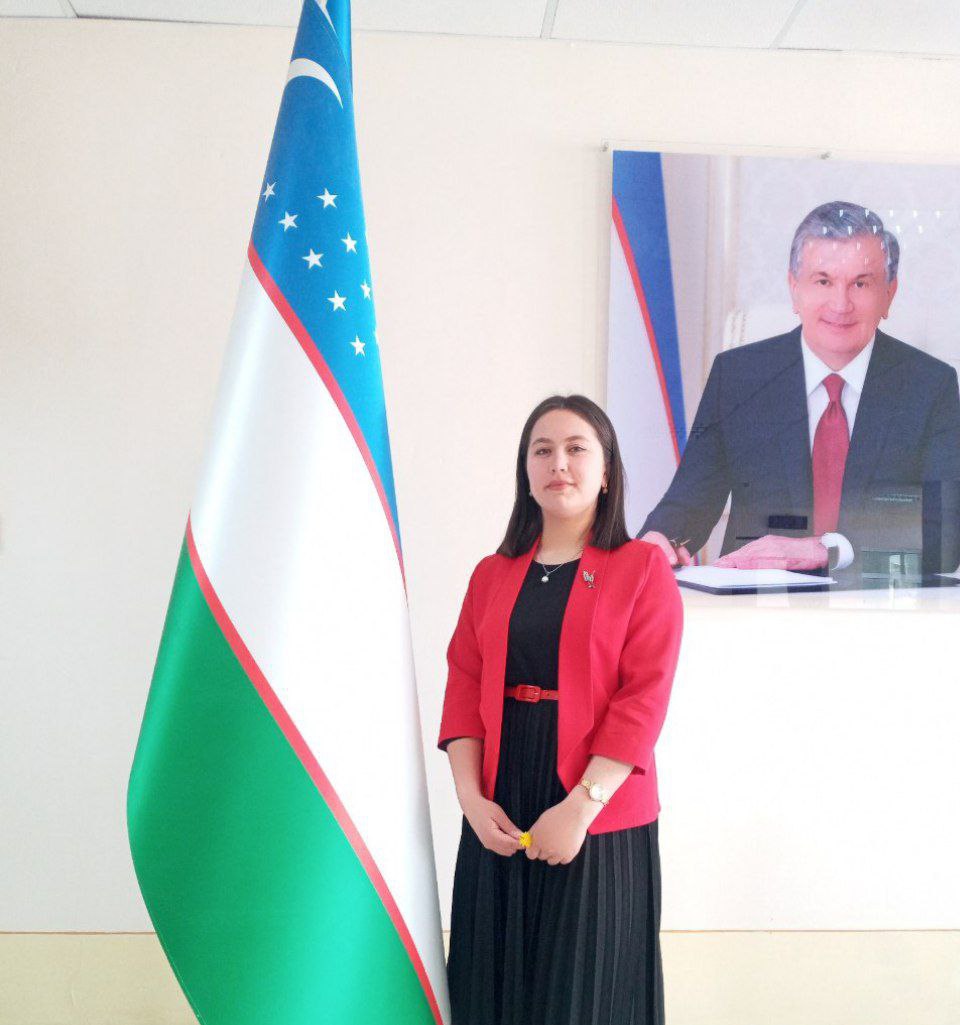
La figlia di Tokhtavaliyeva Gulobar Qobil è nata il 22 giugno 2003 nel distretto di Chust, nella regione di Namangan. Attualmente è una studentessa del 2° anno della Facoltà di Civiltà Orientale e Storia dell’Università Statale di Studi Orientali di Tashkent. I suoi primi risultati sono il 1° posto nel gioco intellettuale della squadra “Creativa” di Zakovat all’università. Vincitore del 3° posto alle Olimpiadi online tra gli studenti dell’università. Il primo articolo scientifico riguarda il complesso archeologico di Zamonbobo. Il proprietario della statuetta e del distintivo “Esploratore dell’anno – 2024”. nel Kenia. L’articolo “Le Meraviglie di Keymadi Grandi” è stato tradotto in inglese e pubblicato sulla rivista internazionale keniana “Classico Times”
I coltelli di Chust
Doppi e coltello sono uno dei valori nazionali del popolo uzbeko. È un tipo di artigianato che i nostri padri e i nostri nonni praticano da molti secoli. Chust è una delle città più antiche della valle ed è famosa per i suoi coltelli unici e per i suoi cappelli tradizionali. I coltelli realizzati dai maestri cittadini meritano il nome di migliori nel nostro paese. Chust è uno dei più antichi centri di lavorazione dei metalli dell’Asia centrale. Nel cuore della città c’è un quartiere di Sozangar, i fabbri che fabbricano coltelli. Nelle piccole officine dei fabbri, gli antichi Sozanger fabbricano ancora i loro coltelli a mano. I coltelli Chust sono estremamente affilati e belli. Le loro lame servono a lungo i loro proprietari e rimangono affilate, i coltelli Chust non sono solo belli, ma svolgono anche compiti insoliti: tagliano i capelli con facilità. In Uzbekistan il termine “coltello Chust” è sinonimo della frase “coltello di alta qualità”.
Nell’Asia centrale nell’VIII secolo a.C., i residenti locali erano impegnati nell’artigianato dei coltelli nella città di Bibiona. Attualmente Bibiona si trova nel distretto di Chust. Mil. Dall’VIII secolo a.C. al XV secolo a Chust si producevano solo coltelli. Ecco perché è diventato noto in tutto il mondo come il coltello Chust. Oggi i coltelli “yorma”, “bodomcha”, “chamandasta”, “chumchuk” e “manico di avvio” vengono prodotti ed esportati all’estero. Chust è un’antica città storica. I maestri della lavorazione dei coltelli si tramandano di generazione in generazione. La fabbrica di coltelli Chust comprendeva la produzione di oltre 100 tipi di coltelli, pugnali, spade e altri prodotti da taglio.
I coltelli nazionali Chust sono vecchi e antichi e, poiché sono realizzati a mano, sono un prodotto popolare in tutti i paesi del mondo. Un vero coltello Chust si distingue sempre dagli altri coltelli per la sua bellezza esteriore. Solitamente la sua lama è piatta, larga 3-4 cm. Il manico di un vero coltello Chust è in avorio, saiga o osso di vapore. È decorato con perle, argento o pietre colorate e la parte metallica è decorata con incisioni. Per questo motivo nel linguaggio popolare viene chiamato anche “coltello Guldor”.
I coltelli Chust si dividono in diverse tipologie a seconda della forma e della larghezza della lama: “coltello Tolbargi”, “coltello Hisori”, “coltello kazako” e “coltello Bodomcha” con lama stretta e ricurva, che ricorda una foglia di salice. È diviso in tipi come “coltello Soylik” con una scanalatura nella parte superiore e “coltello arcobaleno” e “coltello Kushsoylik” con un bordo superiore simile – con una scanalatura lungo il doppio bordo. Chust ha molti tipi di coltelli tradizionali. Esistono anche coltellini speciali per sbucciare la frutta, coltelli da cacciatore e coltelli speciali per tagliare gli alberi.
Scuola di coltelli da cucina. I coltelli realizzati dagli artigiani Chust sono molto diversi dagli altri coltelli. Nel 1932, a Chust fu aperto un artel chiamato “Kyzil Kuch” e da lì furono prodotti i coltelli. Alcuni lavori manuali pesanti venivano eseguiti sui torni. In passato gli artigiani utilizzavano vecchie seghe per realizzare le lame dei coltelli. I manici dei coltelli sono realizzati con corna di animali e legno. Dal 1949 l’artel è gestito come un’associazione distrettuale di servizi domestici. Successivamente, nel 1970, nella città di Chust fu costruito uno stabilimento per la produzione di coltelli. La popolarità dei coltelli Chust si diffuse in tutto il paese. I coltelli Chust hanno preso un posto degno non solo nelle mostre dell’ex Unione Sovietica, ma anche nelle mostre in India, Siria, Polonia, Turchia, Bulgaria, Ungheria, Belgio, Svezia e altri paesi stranieri. Nel 1980, 10 tipi di coltelli Chust furono inviati alla III Fiera Internazionale Asiatica, aperta a Nuova Delhi.
Tokhtavaliyeva Gulobar Qobil daughter was born on June 22, 2003 in Chust District, Namangan Region. Currently, she is a 2nd year student of the Faculty of Eastern Civilization and History of the Tashkent State University of Oriental Studies. Her initial achievements are the 1st place in the Zakovat intellectual game “Creative” team at the university. 3rd place winner in the online Olympiad among students at the university. The first scientific article is about the archaeological complex of Zamonbobo. The owner of the statuette and badge “Explorer of the Year – 2024”. in Kenya. The feature article “The Wonders of Keymadi Grandi” was translated into English and published in the Kenyan international magazine “Classico Times”
Chust’s knives
Doppi and knife are one of the national values of the Uzbek people. It is a type of handcraft that our fathers and grandfathers have been engaged in for many centuries. Chust is one of the oldest cities in the valley and is famous for its unique knives and traditional as well as hats. Knives made by city masters deserve the name of the best in our country. Chust is one of the oldest metal processing centers of Central Asia. In the heart of the city there is a district of Sozangars – blacksmiths who make knives. In small blacksmith workshops, ancient Sozangers still make their knives by hand. Chust knives are extremely sharp and beautiful. Their blades serve their owners for a long time and remain sharp, Chust knives are not only beautiful, but also perform unusual tasks: they cut hair with ease. In Uzbekistan, the term “Chust knife” is synonymous with the phrase “High-quality knife”.
In Central Asia in the 8th century B.C., local residents were engaged in the craft of knives in the city of Bibiona. Currently, Bibiona is located in Chust district. Mil. From the 8th century BC to the 15th century, only knives were produced in Chust. That is why it became known to the whole world as the Chust knife. Today, “yorma”, “bodomcha”, “chamandasta”, “chumchuk” and “boot handle” knives are made and exported abroad. Chust is an ancient historical city. The masters of knife making are passed down from generation to generation. The Chust knife factory included the production of more than 100 types of knives, daggers, swords and other edged products.
Chust national knives are old and ancient, and because they are made by hand, they are a popular product in all countries of the world. A real Chust knife always stands out from other knives with its external beauty. Usually, its blade is flat, 3-4 cm wide. The handle of a real Chust knife is made of ivory, saiga, or steam bone. It is decorated with pearls, silver or colored stones, and the metal part is decorated with engravings. For this reason, it is also called “Guldor knife” in the popular language.
Chust knives are divided into several types depending on the shape and width of the blade: “Tolbargi knife”, “Hisori knife”, “Kazakh knife” and “Bodomcha knife” with a narrow, curved blade, reminiscent of a willow leaf. It is divided into types such as “Soylik knife” with a groove in the upper part and “Rainbow knife” and “Kushsoylik knife” with a similar upper edge – with a groove along the double edge. Chust has many types of traditional knives. There are even special small knives for peeling fruit, knives for hunters, and special knives for cutting trees.
Chust knife school. Knives made by Chust craftsmen are very different from other knives. In 1932, an artel named “Kyzil Kuch” was opened in Chust, and knives were produced from there. Some heavy manual labor was done on lathes. In the past, craftsmen used old saws to make knife blades. Knife handles are made of animal horns and wood. Since 1949, the artel has been managed as a district household service combine. Later, in 1970, a knife production plant was built in the city of Chust. The popularity of Chust knives spread throughout the country. Chust knives have taken a worthy place not only in exhibitions of the former Soviet Union, but also in exhibitions in India, Syria, Poland, Turkey, Bulgaria, Hungary, Belgium, Sweden and other foreign countries. In 1980, 10 types of Chust knives were sent to the III International Asian Fair, which opened in New Delhi.










 Magiche Emozioni dell'Anima