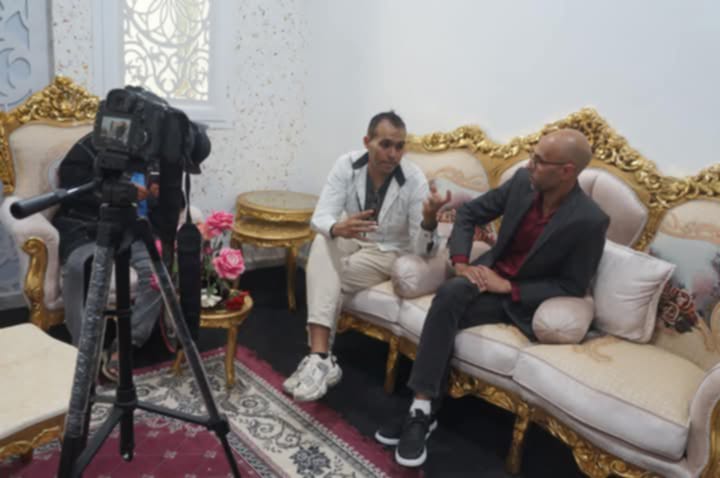
Foto cortesia di Mohamed Rahal dall’Algeria
Mohamed Rahal/Ricercatore algerino
Si tratta di una poesia popolare tratta dalle tradizioni popolari sufi, composta nel XVII secolo. Divenne ampiamente nota durante l’ascesa delle Maddahat (cantanti), una forma di arte performativa femminile, nell’Algeria occidentale, in particolare nelle province di Orano, Mostaganem, Ain Temouchent, Tiaret, Mascara, Sidi Ben Abbas e Tlemcen.
– Una panoramica del patrimonio popolare sufi
Il sufismo in Nord Africa rappresenta un pilastro fondamentale della struttura psicologica dei musulmani di questa regione. È noto che la maggior parte dei santi e dei sufi risiede in Algeria, in particolare nell’Algeria occidentale, considerata la regione con la più alta concentrazione di santi del Nord Africa. Queste tradizioni sono profondamente radicate nel loro patrimonio popolare e vengono cantate in tutte le loro usanze e cerimonie, dai matrimoni e dalle celebrazioni popolari alle feste e alle promesse. Un aspetto chiave del sufismo è la lode al Profeta Muhammad (pace su di lui). La musica, in generale, è una compagna costante di questa lode, e la poesia popolare è da tempo una delle forme poetiche più note scritte a scopo commemorativo, in particolare in lode del Profeta, cantata durante i matrimoni popolari nello stile degli sceicchi. Le influenze femministe si sono evolute nel tempo e si sono affermate nella musica rai algerina, che fiorì negli anni ’70. Sebbene a prima vista possa sembrare lontana da questa atmosfera religiosa, uno studio della storia di questa forma d’arte rivela che attinge al patrimonio popolare. Il rai è un movimento musicale e vocale nato nell’Algeria occidentale alla fine degli anni ’60, che fa risalire le sue origini agli sceicchi del canto beduino. Le sue antiche radici affondano nella lingua dei canti beduini, un dialetto colloquiale vicino all’arabo beduino, e i suoi temi sono in gran parte tratti dalla lode religiosa e dai problemi sociali. Durante il periodo coloniale francese, si concentrava sulla narrazione delle sofferenze della popolazione, evidenziando le difficoltà della vita e i mali sociali, nel tentativo di sensibilizzare i colonizzatori.
– Parole di lode per i sufi
Queste canzoni utilizzano il dialetto algerino occidentale nei loro testi, impiegando espressioni semplici ma ricche di significati morali. Ad esempio, questi testi, cantati da Cheikha Safsajia, che divenne famosa durante il periodo coloniale per aver contrastato la politica coloniale francese di ignoranza imposta al popolo algerino, includono: “Il signore della nazione, Muhammad, che Dio lo benedica e gli conceda la pace”. La nazione di Muhammad, che la benedizione di Dio sia sempre su di lui)
“Il santuario, o Messaggero di Dio, il santuario, o amato da Dio, il giorno in cui sono venuto a te, i miei occhi erano pieni di desiderio” (Il santuario, o Messaggero di Dio, cerco la tua protezione, o amato da Dio, vengo a piedi nudi, chiedendo la tua protezione…)
“Preghiere per il Profeta del Legislatore, Muhammad, o guaritore dei miei mali, preghiere per il Profeta del Legislatore, Muhammad, il Profeta sulla punta della mia lingua” (Preghiere per il Profeta, il legislatore delle religioni, Muhammad, il Profeta, la luce dei miei occhi. Preghiere per il Profeta, il legislatore delle religioni, Muhammad, il Profeta, sempre sulla mia lingua).
– La sua fama come canzone
Quando la musica rai divenne popolare nei primi anni ’80, fu spesso accusata di essere un genere musicale con testi provocatori, nonostante molte poesie popolari di poeti popolari vissuti nei secoli precedenti, come Abdelkader Batabji, Mustafa Ben Ibrahim, Abdelkader El-Khaldi e Abdelkader Ya Boualam, fossero cantate in questo stile. Yamina, Bakhta e i canti di lode religiosi contenuti nelle poesie “Prega per il Profeta, prega con noi” furono cantati per la prima volta. Il primo artista a eseguirli e cantarli dopo gli sceicchi fu Cheb Khaled nel 1982. Molti artisti ne fecero poi delle cover e furono riarrangiati nel 1985 da Cheb Anwar, essendo tra i canti religiosi più famosi nella storia della musica rai. Quando la musica Raï ottenne popolarità internazionale, questa canzone fu scelta per essere eseguita in un concerto importante nella storia del Raï, il concerto “Tre Soli” (3, 2, 1) del 18 settembre 1998.
– Testo:
Pregate per il Profeta **** I suoi compagni sono dieci
Muhammad Al-Munawwar ***** Quello dalla bella carnagione
Lo dico ***** davanti agli ascoltatori
Ai seguaci **** dell’obbligatorio e della Sunnah
Sono sdraiato **** disteso nella mia tomba
Ho sentito la polvere ***** cadere su di me
Sono determinato *** “Dio Onnipotente”
Affido la mia anima **** al fuoco rosso
La madre del Profeta **** allo strumento Saadia
Visitate la tomba della Guida ***** Muhammad il Messaggero
Dite alla Signora ***** Fatima al-Zahra
Costruitemi un palazzo ***** con l’henné verde
Preghiere per il Profeta **** i suoi dieci compagni
Maometto l’Illuminatore ***** l’ornamento della carnagione
Mohamed Rahal/Algerian Researcher
This is a popular poem drawn from Sufi folk traditions, composed in the 17th century. It became widely known during the rise of the Maddahat (female singers), a form of female performance art, in western Algeria, specifically in the provinces of Oran, Mostaganem, Ain Temouchent, Tiaret, Mascara, Sidi Ben Abbas, and Tlemcen.
– An Overview of Sufi Folk Heritage
Sufism in North Africa represents a fundamental pillar of the psychological makeup of the Muslims of this region. It is well-known that most of the saints and Sufis reside in Algeria, particularly in western Algeria, which is considered the region with the highest concentration of saints in North Africa. These traditions are deeply rooted in their popular heritage and are sung at all their customs and ceremonies, from weddings and popular celebrations to feasts and promises. A key aspect of Sufism is the praise of the Prophet Muhammad (peace be upon him). Music, in general, is a constant companion to this praise, and folk poetry has long been one of the most well-known forms of poetry written for the purpose of remembrance, particularly in praise of the Prophet, which is sung at popular weddings in the style of the sheikhs. Feminist influences evolved over time and became known in Algerian Rai music, which flourished in the 1970s. While at first glance it may seem far removed from this religious atmosphere, a study of the history of this art form reveals that it draws upon popular heritage. Rai is a musical and vocal movement that originated in western Algeria in the late 1960s, tracing its origins back to the sheikhs of Bedouin song. Its ancient roots lie in the language of Bedouin songs, a colloquial dialect close to Bedouin Arabic, and its themes are largely drawn from religious praise and social problems. During the French colonial period, it focused on narrating the suffering of the population, highlighting the hardships of life and social ills, attempting to raise awareness among the colonizers.
-Words of praise for Sufis
These songs use the western Algerian dialect in their lyrics, employing simple yet richly moral expressions. For example, these texts, sung by Cheikha Safsajia, who became famous during the colonial period for countering the French colonial policy of ignorance imposed on the Algerian people, include: “The master of the nation, Muhammad, may God bless him and grant him peace.” The nation of Muhammad, may God’s blessings be upon him always)
“The sanctuary, O Messenger of God, the sanctuary, O beloved of God, the day I came to you, my eyes were filled with longing” (The sanctuary, O Messenger of God, I seek your protection, O beloved of God, I come barefoot, asking for your protection…)
“Prayers upon the Prophet of the Lawgiver, Muhammad, O healer of my ailments, prayers upon the Prophet of the Lawgiver, Muhammad, the Prophet on the tip of my tongue” (Prayers upon the Prophet, the legislator of religions, Muhammad, the Prophet, the light of my eyes. Prayers upon the Prophet, the legislator of religions, Muhammad, the Prophet, always on my tongue).
-Its fame as a song
When Rai music became popular in the early 1980s, it was often accused of being a musical genre with inflammatory lyrics, despite the fact that many popular poems by folk poets who lived in previous centuries, such as Abdelkader Batabji, Mustafa Ben Ibrahim, Abdelkader El-Khaldi, and Abdelkader Ya Boualam, were sung in this style. Yamina, Bakhta, and the religious praise songs in the poems “Pray for the Prophet, Pray with Us” were first sung. The first artist to perform and sing them after the sheikhs was Cheb Khaled in 1982. Many artists then covered them, and they were rearranged in 1985 with Cheb Anwar, as they are among the most famous religious songs in the history of Raï music. When Raï music gained international popularity, this song was chosen to be performed at a major concert in the history of Raï, the “Three Suns” (3, 2, 1) concert on September 18, 1998.
– Lyrics:
Pray for the Prophet **** His companions are ten
Muhammad Al-Munawwar ***** The one with the beautiful complexion
I say it ***** in front of the listeners
To the followers **** of the obligatory and the Sunnah
I am lying **** stretched out in my grave
I felt the dust ***** falling on me
I am determined *** “God Almighty”
I surrender my soul **** to the red fire
The Prophet’s mother **** to the instrument Saadia
Visit the grave of the Guide ***** Muhammad the Messenger
Tell the Lady ***** Fatima al-Zahra
Build me a palace ***** with green henna
Prayers upon the Prophet **** his ten companions
Muhammad the Illuminator ***** the adornment of the complexion

Leggi anche 👇
Mohamed Rahal condivide una poesia popolare tratta dalle tradizioni popolari sufi, composta nel XVII secolo, pubblicazione di Elisa Mascia -Italia
 Magiche Emozioni dell'Anima