
Foto cortesia di Mohamed Rahal dall’Algeria
💥 Intelligenza artificiale e la scintilla degli inizi
Punti chiave della conferenza stampa della giuria del Marrakech Film Festival
Mohamed Rahal ✍️
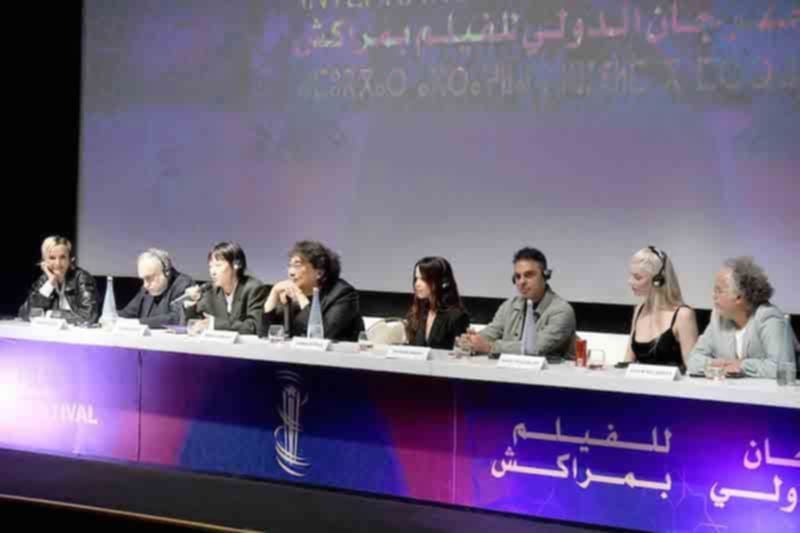
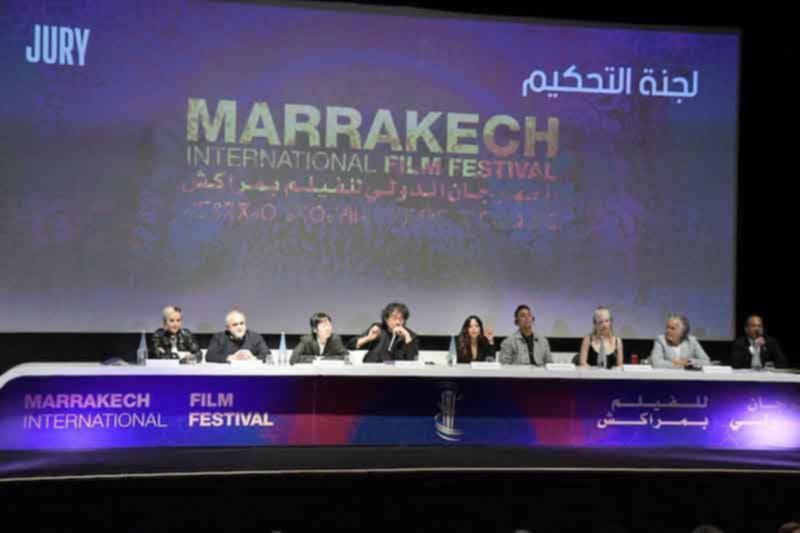
🔸 I membri della giuria del Marrakech International Film Festival hanno aperto le porte alle domande dei giornalisti durante una conferenza stampa che ha preceduto le proiezioni ufficiali dei film in concorso. Gli otto giurati hanno parlato prima che i teatri si oscurassero per scoprire le opere cinematografiche concorrenti.
🔸 I temi dell’intelligenza artificiale e della “scintilla” dei film d’esordio sono stati i punti chiave discussi nella conferenza stampa tenuta dai membri della giuria del 22° Festival Internazionale del Cinema di Marrakech sabato 29 novembre.
🔸 Il regista e presidente della giuria sudcoreana Bong Joon-ho ha confermato che sperava di partecipare al festival da diversi anni, affermando: “Il Marrakech Film Festival è molto importante per me. Alcuni anni fa, un film sudcoreano relativamente sconosciuto vinse il Gran Premio in un festival in cui Marion Cotillard faceva parte della giuria e Martin Scorsese era presidente. Questo premio ha dato al film l’opportunità di essere scoperto e ottenere un ampio riconoscimento.”
🔸 Il premio Oscar per il suo capolavoro “Brasile” ritiene che “ciò che distingue questo festival è che ci permette di scoprire giovani talenti e di presentare i loro film d’esordio, e questo non ha prezzo”
🔸 Il presidente della giuria ha anche incoraggiato i giovani registi a mantenere “la scintilla dei loro inizi” Ha spiegato: “In un primo film, un regista mostra una grande dose di follia e audacia che non viene necessariamente scoperta in seguito. Questa follia è ciò che dà al cinema la sua magia. Sono qui per vedere questa audacia e sentire questa energia.”
🔸 Da parte sua, la regista francese Julia Ducornu ha spiegato che, in quanto membro della giuria, si è rifiutata di agire come critica. “Sono diventato cieco, per scoprire i film e mettere in discussione il significato del cinema.”
🔸 L’attrice Gina Ortega ha adottato lo stesso approccio, ammettendo di non aver visto alcun trailer. Ha affermato: “È la prima volta che faccio parte di una giuria e questo è molto importante per me. Il nostro ruolo è quello di chiuderci in un teatro buio per scoprire i film concorrenti e assaporare ogni scena e ogni emozione.” “È semplicemente geniale.”
🔸 Sono sorte domande sull’integrazione dell’intelligenza artificiale nei processi creativi e produttivi del cinema odierno, con i membri della giuria che hanno espresso opinioni divergenti e sottili variazioni nelle loro risposte. Alcuni lo consideravano uno strumento “promettente ma ancora poco compreso”, mentre altri insistevano sulla necessità di preservare lo “spirito umano” al centro della creatività. Per la maggior parte della giuria, l’intelligenza artificiale può essere utile, ma non può sostituire nessuno.
🔸 Il presidente della giuria coreana, Bong Joon-ho, ha evidenziato un aspetto positivo dell’intelligenza artificiale che è stato ampiamente trascurato: ha rivelato la ricerca da parte dell’umanità di ciò che ci distingue dalle altre creature. Ha affermato che uno dei vantaggi del dibattito sull’intelligenza artificiale è che ci ha spinto a chiederci cosa ci rende unici come esseri umani, cosa possediamo che le macchine non possono sostituire.
🔸 Da parte sua, la regista e sceneggiatrice Celine Song, le cui parole hanno trovato eco nel pubblico, ha affermato: “L’intelligenza artificiale può essere un alleato nello svolgimento di alcuni compiti tecnici, ma non sostituirà mai la sensibilità di un attore” Il nostro ruolo principale è difendere l’umanità.”
🔸 Gina Ortega ha sottolineato che “l’intelligenza artificiale non può sostituire gli esseri umani.” Secondo lei, “la magia del cinema sta nell’emozione.”
🔸 Ha continuato, “Un robot non può spiegarlo. Amiamo il cinema per le sue emozioni, i suoi errori, i suoi difetti. Come attrice, voglio esprimere i miei sentimenti davanti alla telecamera senza artifici. L’intelligenza artificiale non sostituirà mai questo tipo di lavoro.”
🔸 Julia Ducornu ritiene che “l’intelligenza artificiale debba rimanere uno strumento. Non dovrebbe mai sostituire l’interazione umana. Certamente, per alcuni produttori potrebbe essere allettante tagliare i costi, ma ciò non dovrebbe avvenire a spese dei tecnici e degli attori. Sarebbe completamente sbagliato.”
💥 Artificial Intelligence and the Spark of Beginnings
Key Points from the Marrakech Film Festival Jury Press Conference
Mohamed Rahal ✍️
🔸 The members of the Marrakech International Film Festival jury opened their doors to journalists’ questions at a press conference preceding the official screenings of the competing films. The eight jurors spoke before the theaters went dark to discover the competing cinematic works.
🔸 The topics of artificial intelligence and the “spark” of debut films were the key points discussed at the press conference held by the jury members of the 22nd Marrakech International Film Festival on Saturday, November 29th.
🔸 South Korean director and jury president Bong Joon-ho confirmed that he had been hoping to participate in the festival for several years, saying: “The Marrakech Film Festival is very important to me. A few years ago, a relatively unknown South Korean film won the Grand Prix in a festival where Marion Cotillard was on the jury, and Martin Scorsese was president. This award gave the film the opportunity to be discovered and gain widespread recognition.”
🔸 The Oscar winner for his masterpiece “Brazil” believes that “what distinguishes this festival is that it allows us to discover young talents and showcase their debut films, and this is priceless.”
🔸 The jury president also encouraged young directors to maintain “the spark of their beginnings.” He explained, “In a first film, a director displays a great deal of madness and audacity that isn’t necessarily discovered later. This madness is what gives cinema its magic. I’m here to see this audacity and feel this energy.”
🔸 For her part, French director Julia Ducornu explained that, as a member of the jury, she refused to act as a critic. “I became blind, to discover the films and question the meaning of cinema.”
🔸 Actress Gina Ortega took the same approach, admitting that she hadn’t seen any trailers. She said, “This is my first time being on a jury, and that’s very important to me. Our role is to shut ourselves away in a darkened theater to discover the competing films, and to savor every scene and every emotion.” “It’s simply brilliant.”
🔸 Questions arose about the integration of artificial intelligence into the creative and production processes of cinema today, with the jury members offering differing opinions and subtle variations in their responses. Some viewed it as a “promising but still poorly understood” tool, while others insisted on the necessity of preserving the “human spirit” at the heart of creativity. For the majority of the jury, AI can be helpful, but it cannot replace anyone.
🔸 The head of the Korean jury, Bong Joon-ho, highlighted a positive aspect of AI that has been largely overlooked: it has revealed humanity’s search for what distinguishes us from other creatures. He stated that one of the benefits of the AI debate is that it has prompted us to question what makes us unique as humans, what we possess that machines cannot replace.
🔸 For her part, director and screenwriter Celine Song, whose words resonated with the audience, said: “AI may be an ally in accomplishing some technical tasks, but it will never replace the sensitivity of an actor.” Our primary role is to defend humanity.”
🔸 Gina Ortega emphasized that “artificial intelligence cannot replace humans.” In her opinion, “the magic of cinema lies in emotion.”
🔸 She continued, “A robot cannot explain that. We love cinema for its emotions, its mistakes, its flaws. As an actress, I want to express my feelings in front of the camera without artifice. Artificial intelligence will never replace this kind of work.”
🔸 Julia Ducornu believes that “artificial intelligence should remain a tool. It should never replace human interaction. Certainly, it may be tempting for some producers to cut costs, but this should not be at the expense of technicians and actors. That would be completely wrong.”
Leggi anche 👇https://alessandria.today/2025/12/08/intelligenza-artificiale-e-la-scintilla-degli-inizipunti-chiave-della-conferenza-stampa-della-giuria-del-marrakech-film-festivalmohamed-rahal-pubblicazione-di-elisa-mascia-italia/
 Magiche Emozioni dell'Anima