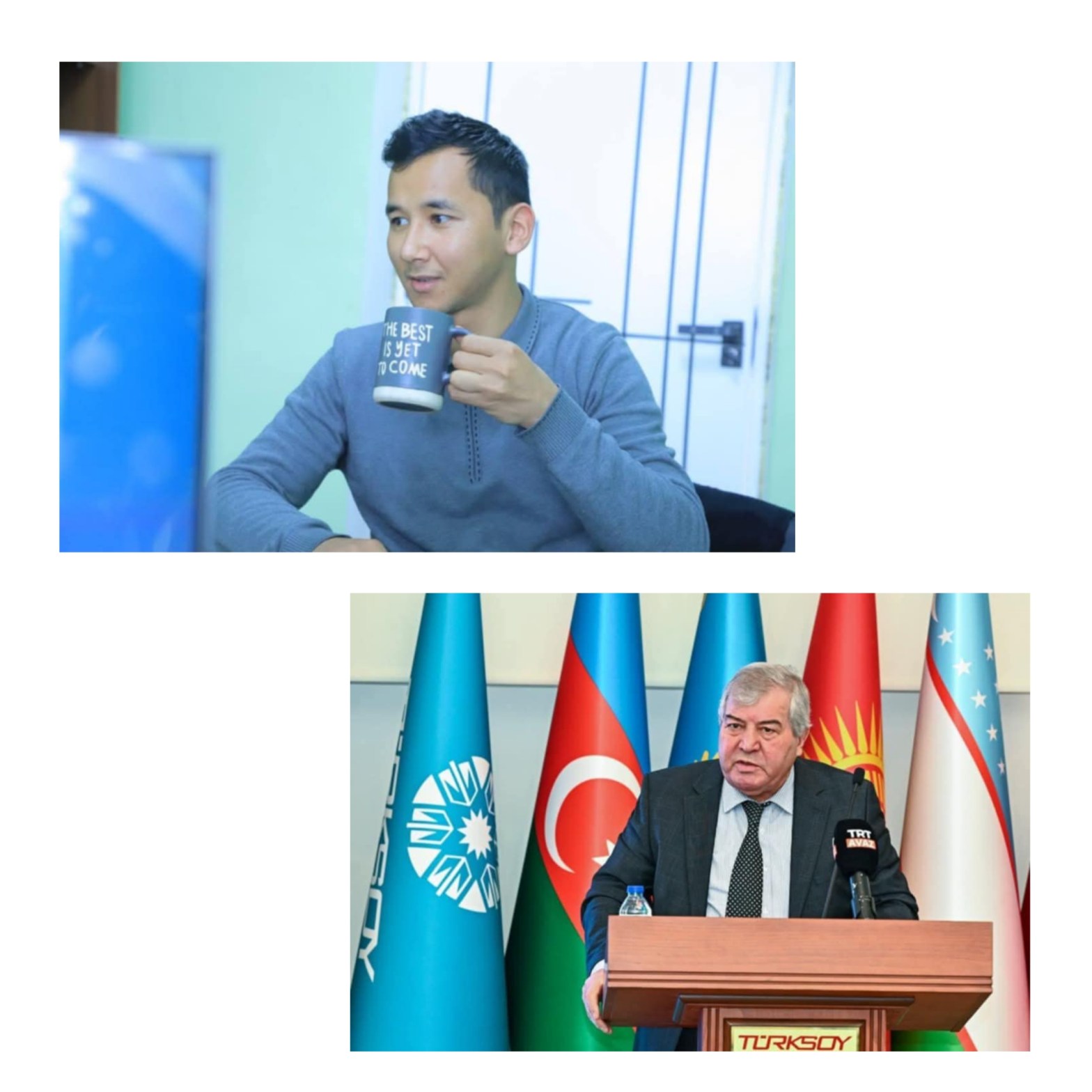
Foto cortesia del poeta Sabir Rustamkhanli e del giornalista Jahongir Nomozov
UN POETA NON È CHE UNA SINGOLA PARTICELLA DI TUTTA L’UMANITÀ
Il nostro ospite è Sabir Rustamkhanli — poeta popolare della Repubblica dell’Azerbaigian, presidente del Partito della Solidarietà Civica, figura di spicco della letteratura azera e illustre statista e personaggio pubblico.
— Quali colori e suoni della tua infanzia rimangono nella memoria della tua anima?
Quanto hanno contribuito questi colori e suoni alla formazione del tuo spirito poetico?
— Un critico che ha studiato la mia poesia una volta scrisse: “Il colore dominante nelle poesie di Sabir Rustamkhanli è il bianco.”
Dall’esterno potrebbe sembrare così — e su questo si potrebbe discutere. Dopotutto, amo profondamente il colore blu, simbolo dell’identità turca. “Latte materno,” “Chiaro di luna,” “Montagne innevate,” “Sogni bianchi,” “Speranze bianche,” “Le mani di nostra madre coperte di farina, il suo viso coperto di farina…” “L’inizio della vita è bianco e la sua fine è bianca” — queste sono tra le mie metafore più frequenti. Probabilmente il critico ha basato la sua conclusione sulla ricorrenza di tali immagini nel mio lavoro.
In effetti, sono nato in un villaggio di montagna dove l’inverno sembrava infinito e la neve definiva il paesaggio, e ho scritto molte poesie sulla neve. Anche la gentilezza nella mia natura, la mia abitudine di fare del bene agli altri, rafforza questo colore “bianco”.
Ma altri colori dell’infanzia sono altrettanto indimenticabili — la tonalità dorata dei campi maturi, la ricchezza dei cortili di trebbiatura del grano e le foreste autunnali ingiallite. Tutto ciò che è legato all’addio e alla separazione mi ha sempre commosso profondamente.
La questione del suono è più complessa. Quali ricordo di più? Le grida delle gru migratrici che volano verso sud sopra le nostre case. Per qualche ragione, ho sempre immaginato che queste gru volassero verso Tabriz — verso l’Azerbaigian meridionale, che oggi rimane entro i confini dell’Iran. Il coro mattutino degli uccelli che si svegliavano dal sonno era tenero come i battiti assordanti del tuono, il suono della pioggia primaverile e il ruggito tremante dei fulmini. Forse è per questo che nelle mie poesie compaiono spesso espressioni come “allodole appese alle proprie voci” o “il grido di un fulmine”. E c’è anche il suono del ney — il flauto di canna — un suono che può scuotere il cuore fino al midollo.
— Nella poesia, come si può risvegliare lo spirito nazionale e allo stesso tempo conciliarlo con i valori umani universali?
— Ciò che chiamiamo “universale” è in realtà la somma di molti valori nazionali individuali. Risvegliare lo spirito nazionale non allontana un popolo dai valori universali — al contrario, lo avvicina. Ciò vale per tutti i campi dell’arte.
Prendiamo Samarcanda, Bukhara e Khiva: i loro monumenti sono nazionali. Sono il prodotto del lavoro e dello spirito uzbeko. Ma come si può separarli dal patrimonio della cultura mondiale? Man mano che le culture nazionali crescono, con esse cresce anche la cultura universale. Essere nazionali significa amare — il tuo passato, la tua storia, la tua terra, il tuo potere creativo.
Amando te stesso, non dichiari guerra agli altri. I guerrafondai sono coloro che, sotto la bandiera dell’“universalismo”, cercano di cancellare il carattere unico e il percorso storico delle nazioni, soffocando il mondo in un unico grigio opaco sotto il nome di globalizzazione. Ma secondo me, se vuoi essere veramente universale, conosci meglio te stesso — sii più nazionale.
Per secoli, l’esistenza nazionale, la lingua, la memoria storica, lo spirito combattivo, il desiderio di unità e libertà, la fede nella forza e la capacità di vita indipendente dei turchi azeri sono stati preservati proprio attraverso la letteratura —sia scritta che orale.
Quando la politica aprì la porta all’occupazione persiana e russa e la teologia alla dominazione araba, fu la letteratura a mantenere in vita il nostro popolo sulle proprie radici azero-turche. Sapendo questo, i nostri nemici nel corso della storia hanno preso di mira prima i maestri delle parole, i pensatori, la lingua madre — cercando di renderci schiavi delle lingue straniere, delle letterature straniere, dei modi di pensare stranieri. Dobbiamo garantire che lo spirito dell’universalismo non si trasformi mai in una forma di occupazione spirituale.
— Il rapporto tra maestro e apprendista non è semplicemente la trasmissione della conoscenza, ma una scuola di spirito che passa di cuore in cuore. Come descriveresti la più grande lezione che hai imparato in questa scuola?
— Quando parlo di “maestri,” penso prima ai miei insegnanti, e poi agli autori classici della letteratura scritta in lingua turca. Entrambe sono state sorgenti pure da cui ho bevuto profondamente. I miei insegnanti, seguendo il cammino di mio padre e di mia madre, mi hanno insegnato l’onestà, l’integrità, l’amore per il lavoro e la lealtà verso la mia patria e il mio focolare. Allo stesso tempo, hanno riempito il mio cuore di amore per la terra, la nazione e la storia del mio Paese — con spirito di libertà e coraggio.
Dai nostri grandi maestri letterari — Dede Qorqud, Nizami Ganjavi, Nasimi, Navai, Fuzuli— ho imparato l’amore per la mia lingua madre, gli ideali del grande umanesimo, il legame tra Dio e l’uomo, la perfezione spirituale e la capacità di vedere l’universo nel suo insieme.
— Secondo te, dove si rivela più chiaramente il filo conduttore che collega poesia e umanità?
— Poesia e umanità non sono cose separate. La poesia è lo stato dell’essere umano che più si avvicina al profeta, a Dio, ai cieli. Un poeta vede non solo la vita esteriore delle persone ma anche i loro mondi interiori. Ma la cosa più importante è che il poeta ama le persone — e trascorre un’intera vita a scrivere di quell’amore. Per me, il filo più corto tra i due è l’amore.
La poesia è un sentimento eterno e immutabile dell’anima umana — tanto che è difficile tracciare confini tra il mondo morale ed emotivo del passato e del futuro. Non importa quanto l’intelletto, la conoscenza e l’educazione di una persona si espandano e si modernizzino — anche al punto che l’essere umano di oggi, con conoscenze enciclopediche, potrebbe stupire i più grandi studiosi del passato — le sue emozioni e i suoi sentimenti non differiscono molto da quelli dei suoi predecessori.
Ciò che cambia è la forma di espressione. In passato i guerrieri andavano a incontrare i loro amati a cavallo o in carrozza; oggi vanno in macchina. Eppure l’essenza del sentimento che li porta a quell’incontro è cambiata molto poco. Credo che alcune qualità che vediamo oggi nella letteratura saranno anche i tratti distintivi del futuro. La poesia di domani conserverà senza dubbio due tendenze che già conosciamo: in primo luogo, crescerà il suo contenuto informativo — in altre parole, la letteratura diventerà più intelligente; e in secondo luogo, soprattutto per la poesia, rimarrà un percorso incrollabile e senza tempo — il linguaggio del sentimento e dell’amore.
— Secondo te, qual è la più grande felicità di un poeta — l’effetto che la sua scrittura ha sulle persone, l’essere ricordato dalla storia o l’alleggerimento del cuore?
— Credo che ciò che conta di più è che il poeta svuoti il proprio cuore — dando voce al suono della propria anima, alle proprie emozioni, al proprio amore e alla propria rabbia. In questo processo, il poeta raramente, se non mai, pensa all’effetto delle sue parole sugli altri o se la sua opera rimarrà nella storia.
— “La parola è un potere divino,” dicono. Secondo te, quanto è preziosa la parola oggi? I poeti e gli scrittori di oggi possono ancora influenzare la società?
— L’atteggiamento nei confronti della parola cambia a seconda delle circostanze storiche e del livello culturale delle nazioni. In sostanza, la parola è davvero un potere divino. Si crede addirittura che l’Universo stesso sia stato creato dal comando del Creatore, “Essere.” In Oriente questa convinzione è particolarmente forte. La fede dei nostri poeti classici in “Wahdat al-Wujud ”—l’unità dell’essere, l’idea dell’uomo come particella di Dio, direttamente legata al Creatore— ha influenzato sia il nostro linguaggio sia il nostro pensiero letterario. Sapete bene quanto fosse diffuso il movimento Hurufi nel mondo turco: ogni caratteristica del volto umano veniva paragonata a una lettera e le parole incise su di essa venivano lette come versetti divini.
Oggi, esteriormente, la parola può sembrare aver perso parte della sua magia, eppure nessun’altra forza l’ha sostituita. In Azerbaigian la parola dei poeti e degli scrittori è sempre stata vista come la voce della saggezza, la parola di un anziano. La gente si fidava dei poeti. Quando nel 1988 ebbe inizio il movimento indipendentista nazionale, poeti e scrittori —me compreso— erano in prima linea. Il popolo credeva in noi; ci seguivano. Forse è per questo che le autorità hanno sempre guardato agli uomini di lettere e di letteratura con una certa gelosia, forse persino paura.
Oggigiorno, in tutto il mondo, si verificano tentativi deliberati di screditare la letteratura e l’arte. Gli scrittori vivono in un clima costante di disagio. Il sostegno statale alla letteratura è in calo e le tirature ridotte impediscono ai nuovi libri di diventare ampiamente conosciuti. Eppure la letteratura conserva ancora la sua forza e la sua capacità di influenzare la società. La letteratura è sovrana—sovrana anche sui governanti e sugli stati.
— Come artista, qual è il problema che più ti preoccupa nella società odierna e come può un poeta affrontarlo?
— La preoccupazione maggiore è il processo globale che cerca di trasformare le persone in schiavi dell’Occidente, in robot, tagliandole dalle loro radici, distruggendo famiglie e valori tradizionali. Ciò influisce inevitabilmente sulla creatività del poeta, spesso mettendolo direttamente a confronto con i processi in corso. In tali momenti, il poeta deve diventare il custode dei valori morali della sua nazione, della lingua madre, dello spirito nazionale, della giustizia e della democrazia. La fortezza della parola è eterna e il poeta deve sempre trovarsi al suo interno.
— La vita di un poeta non dovrebbe consistere esclusivamente nella poesia. Secondo te, cos’altro dovrebbe arricchire il mondo del poeta?
— Sebbene io sia un poeta popolare dell’Azerbaigian, non mi sono mai limitato a un solo genere. Nel corso della mia vita ho scritto saggi e articoli giornalistici. Non esiste ambito della vita di cui non abbia parlato da una chiara posizione civica. Fin da giovane ho rappresentato la letteratura azera in vari forum internazionali. Nel 1988 ho contribuito a guidare il movimento “Meydan”. Nel 1989 ho pubblicato il primo giornale indipendente e democratico dell’Azerbaigian. Nel 1990, su insistenza del popolo, sono stato eletto al parlamento. In seguito ho ricoperto la carica di Ministro della Stampa e dell’Informazione. Ho rappresentato l’Azerbaigian al Parlamento Mondiale e all’Unione Parlamentare dell’Organizzazione dei Paesi Islamici. Sono copresidente del Congresso mondiale degli azeri.
In verità, non ho vissuto semplicemente la vita di un poeta—perché per me essere poeta significa innanzitutto essere un cittadino esemplare del proprio Paese.
Come ho scritto in una delle mie poesie:
I poeti non vengono sulla terra solo per scrivere versi;
Arrivano quando si perde l’equilibrio del mondo.
Vengono quando i cuori sono velati da cortine di ferro,
Quando nelle vene scorrono acque arrugginite invece che sangue.
Solo i poeti possono sopportare i fardelli che piegano il mondo,
Il peso inflessibile del dolore che preme la terra come una sfera.
Tormenti e dolori troppo vasti per un milione di cuori
Troveranno il loro posto nel cuore di un singolo poeta.
I poeti non vengono solo per guardare con occhi sognanti
Ai fiori e ai fiori,
Oppure sussurrare versi al fascino delle donne e andarsene.
Vengono per diffondere la luce nei cuori umani,
Per seminare giustizia,
E per farlo crescere.
— Molte delle tue poesie si concentrano sulla patria, sul turkmeno, sul dolore del popolo e su temi nazionali. In una poesia che glorifica il passato storico della Nazione, oltre al talento, all’ispirazione e alla conoscenza, quali altre qualità sono importanti?
— Credo che sia in ultima analisi una questione di destino se un poeta scriva poesie a tema civico, socialmente e politicamente cariche, o se si concentri invece su argomenti lirici o filosofici. Nessuno scrittore può semplicemente fare una scelta del genere meccanicamente. Anche l’educazione familiare e scolastica gioca un ruolo significativo in questo. Sono nato al confine con l’Iran e fin da bambino ho compreso l’immensa tragedia della divisione tra una Nazione e una Patria. Tali sentimenti non possono essere vissuti in altri ambienti. Fondamentali sono anche la conoscenza storica e quella che io chiamo “Memoria del Sangue”. Quanto più una persona conosce e comprende se stessa, la propria Nazione, la propria storia e il mondo, tanto più è saldamente legata alle proprie radici e al proprio focolare. Senza vedere e conoscere il mondo turco, senza studiarne e amarne la storia e la cultura, cosa potresti mai scriverne?
L’amore per la propria Patria e Nazione deve essere come l’amore di Majnun—puro, consumante e pronto a qualsiasi sacrificio in suo nome.
— “Il poeta è lo specchio della società,” dicono. Secondo lei, i poeti del mondo turco odierno possono davvero essere lo specchio della società?
— Il mondo turco è vasto e al suo interno i poeti compongono canzoni— ognuna diversa, ognuna bella a modo suo. È necessario che si conoscano meglio e che si presentino più ampiamente le rispettive opere.
Il mondo turco ha sempre prodotto grandi talenti e continua a farlo. La poesia e la letteratura sono forme d’arte che riflettono l’energia interiore di una Nazione, la sua forza e la sua capacità di resistere al male. Un popolo che può vedere il mondo attraverso occhi poetici e creare potenti opere d’arte non ha paura dell’esaurimento, dell’estinzione o della morte.
Vorrei fare un altro esempio: i turkmeni di Kirkuk, che fanno parte dei turchi azeri, rimangono lontani dall’Azerbaigian e dalla Turchia, situati all’interno della mappa politica dell’Iraq. Nonostante tale isolamento e pressione politica, invece di dimenticare la loro lingua e il loro spirito, hanno invece riversato la loro forza nella creatività poetica. Per loro la Parola è diventata lo specchio della loro volontà di vivere. Gli innumerevoli khoryat e mani di Kirkuk (poesie di quattro versi, bayati) sono un mondo misterioso. In sole quattro righe catturano tutti i segreti, le gioie, i dolori, la determinazione a lottare e persino la morte che appartengono alla natura umana e all’esistenza sulla Terra.
Anche il folklore e la letteratura scritta estremamente ricchi dei popoli turchi, sebbene ereditati dal passato, sono garanzia del loro brillante futuro.
Per me, senza un discorso poetico, il mondo perderebbe la sua bellezza. Credo nel potere della Parola.
Nasciamo dalla Parola, la nostra essenza è pura,
Dobbiamo cambiare il mondo attraverso le parole.
La morte è la nostra trincea finale,
Dobbiamo lottare fino all’ultima parola!
— Qual è il legame principale tra un poeta e l’umanità?
— Il poeta è una particella dell’umanità stessa. Proprio come una goccia d’acqua può riflettere il mondo intero al suo interno, un poeta, attraverso la sua vita e il suo lavoro creativo, riflette l’intero spirito, gli ideali e le qualità essenziali dell’umanità. Questo è il nucleo della connessione.
— Secondo te, la letteratura contemporanea può trovare la sua strada nel cuore delle persone? Quando la letteratura convive con il popolo e la Nazione?
— Affinché la letteratura raggiunga il cuore delle persone, deve prima essere consegnata loro.
In altre parole, le tirature dei libri dovrebbero essere sufficientemente grandi da consentire l’accesso a tutti i lettori interessati. La rete di distribuzione di libri che esisteva durante l’era sovietica non esiste più. L’interesse dello Stato per i libri è diminuito; non li usa più come strumento ideologico. Le tirature sono limitate e in molti distretti e villaggi nessun nuovo libro raggiunge affatto i lettori. L’idea che “ora che esistono gli e-book, non abbiamo più bisogno di libri fisici e biblioteche” si sta diffondendo sempre di più — e questo è un modo di pensare completamente sbagliato.
Autori in viaggi nelle zone rurali e gli incontri con i lettori sono diventati rari. I canali televisivi preferiscono dare spazio a programmi di intrattenimento e letteratura a basso costo piuttosto che a opere letterarie serie. Sui social media, invece di opere significative e artistiche, vengono spesso condivise pile di parole prive di significato.
Per questo motivo, non è del tutto giusto lamentarsi del fatto che la letteratura non tocchi il cuore delle persone — c’è uno sforzo deliberato per togliere la letteratura dall’essere un valore dell’intera Nazione e trasformarla nel possesso di una cerchia ristretta.
Per quanto strano possa sembrare il paragone, oggi la letteratura viene trattata come un soldato congedato dall’esercito. Eppure, nel momento in cui inizia una guerra, tutti rivolgono lo sguardo alla parola e agli intellettuali. Nei momenti difficili, la parola —come un soldato — sta in prima linea, faccia a faccia con il nemico, insieme al popolo.
È stato il caso della recente guerra del Karabakh con l’Armenia, quando la letteratura azera, con tutto il suo potere, era al fianco del nostro esercito e tra il nostro popolo.
Nonostante le realtà negative che ho menzionato riguardo ai libri, la letteratura rimane per sempre nel cuore delle persone e al loro fianco.
Jakhongir NOMOZOV,
è un giovane poeta e giornalista uzbeko. È anche membro dell’Unione dei giornalisti dell’Azerbaigian e dell’Unione mondiale dei giovani scrittori turchi.
A POET IS BUT A SINGLE PARTICLE OF ALL HUMANITY
Our guest is Sabir Rustamkhanli — People’s Poet of the Republic of Azerbaijan, Chairman of the Civic Solidarity Party, a prominent figure of Azerbaijani literature, and a distinguished statesman and public figure.
— What colors and sounds from your childhood remain in the memory of your soul?
How much have these colors and sounds contributed to the making of your poetic spirit?
— One critic who studied my poetry once wrote: “The dominant color in Sabir Rustamkhanli’s poems is white.”
From the outside, it may seem so — and one could debate this. After all, I deeply love the color blue, the symbol of Turkic identity. “Mother’s milk,” “Moonlight,” “Snowy mountains,” “White dreams,” “White hopes,” “Our mother’s hands covered in flour, her face covered in flour…” “The beginning of life is white, and its end is white” — these are among my frequent metaphors. The critic likely based his conclusion on the recurrence of such images in my work.
Indeed, I was born in a mountain village where winter seemed endless and snow defined the landscape, and I have written many poems about snow. The kindness in my nature, my habit of doing good for others, also reinforces this “white” color.
But other colors from childhood are equally unforgettable — the golden hue of ripened fields, the richness of grain-threshing yards, and the yellowing autumn forests. Anything tied to farewell and parting has always moved me deeply.
The matter of sound is more complex. Which ones do I remember most? The cries of migrating cranes flying south over our houses. For some reason, I always imagined that these cranes were flying toward Tabriz — to Southern Azerbaijan, which today remains within the borders of Iran. The early morning chorus of birds waking from sleep was as tender as the ear-splitting claps of thunder, the sound of spring rain, and the earth-shaking roar of lightning. Perhaps that is why in my poems, expressions like “larks hanging from their own voices” or “the cry of lightning” appear often. And there is also the sound of the ney — the reed flute — a sound that can shake the heart to its core.
— In poetry, how can one awaken the national spirit while also reconciling it with universal human values?
— What we call “universal” is in fact the sum of many individual national values. Awakening the national spirit does not distance a people from universal values — on the contrary, it brings them closer. This applies to all fields of art.
Take Samarkand, Bukhara, and Khiva: their monuments are national. They are the product of Uzbek labor and spirit. Yet how can anyone separate them from the heritage of world culture? As national cultures grow, universal culture grows with them. To be national is to love — your past, your history, your land, your creative power.
By loving yourself, you declare no war on others. The warmongers are those who, under the banner of “universalism,” seek to erase the unique character and historical journey of nations, smothering the world in a single dull gray under the name of globalization. But in my view, if you want to be truly universal, know yourself better — be more national.
For centuries, the national existence, language, historical memory, fighting spirit, yearning for unity and freedom, faith in strength, and capacity for independent living of the Azerbaijani Turks have been preserved precisely through literature — whether written or oral.
When politics opened the door to Persian and Russian occupation, and theology to Arab domination, it was literature that kept our people alive upon their own Azerbaijani-Turkic roots. Knowing this, our enemies throughout history have first targeted the wordsmiths, the thinkers, the mother tongue — seeking to enslave us to foreign languages, foreign literatures, foreign ways of thought. We must ensure that the spirit of universalism never turns into a form of spiritual occupation.
— The relationship between master and apprentice is not merely the transmission of knowledge, but a school of spirit that passes from heart to heart. How would you describe the greatest lesson you learned in this school?
— When I speak of “masters,” I first think of my schoolteachers, and then of the classical authors of literature written in the Turkic language. Both have been pure springs from which I have drunk deeply. My schoolteachers, following the path of my father and mother, taught me honesty, integrity, love for work, and loyalty to my homeland and hearth. At the same time, they filled my heart with love for the land, the nation, and the history of my country — with the spirit of freedom and courage.
From our great literary masters — Dede Qorqud, Nizami Ganjavi, Nasimi, Navai, Fuzuli — I learned love for my mother tongue, the ideals of great humanism, the bond between God and man, spiritual perfection, and the ability to see the universe as a whole.
— In your opinion, where is the finest thread connecting poetry and humanity most clearly revealed?
— Poetry and humanity are not separate things. Poetry is the state of being human that stands closest to the prophet, to God, to the heavens. A poet sees not only the outer life of people but also their inner worlds. Most importantly, the poet loves people — and spends an entire lifetime writing from that love. To me, the shortest thread between the two is love.
Poetry is an eternal, immutable feeling of the human soul — so much so that it is difficult to draw boundaries between the moral and emotional worlds of the past and future. No matter how much a person’s intellect, knowledge, and education expand and modernize — even to the point where today’s human, with encyclopedic knowledge, could astonish the greatest scholars of the past — their emotions and feelings do not differ greatly from those of their predecessors.
What changes is the form of expression. In the past, warriors went to meet their beloveds on horseback or in carriages; today they go by car. Yet the essence of the feeling that takes them to that meeting has changed very little. I believe that some qualities we now see in literature will also be hallmarks of the future. The poetry of tomorrow will, without doubt, preserve two tendencies we already know: first, its informational content will grow — in other words, literature will become more intelligent; and second, especially for poetry, there will remain an unshakable and timeless path — the language of feeling and love.
— In your opinion, what is the greatest happiness of a poet — the effect their writing has on people, being remembered by history, or the lightening of the heart?
— I believe what matters most is that the poet empties their heart — giving voice to the sound of their own soul, to their emotions, to their love and their anger. In this process, the poet rarely, if ever, thinks about the effect of their words on others or whether their work will remain in history.
— “The word is a divine power,” they say. In your opinion, how valuable is the word today? Can today’s poets and writers still influence society?
— The attitude toward the word changes according to historical circumstances and the cultural level of nations. In essence, the word truly is a divine power. There is even a belief that the universe itself was created from the Creator’s command, “Be.” In the East, this belief is especially strong. The faith of our classical poets in “Wahdat al-Wujud”—the unity of being, the idea of man as a particle of God, directly bound to the Creator—has influenced both our language and our literary thought. You know well how widespread the Hurufi movement was in the Turkic world: every feature of the human face was likened to a letter, and the words inscribed upon it were read as divine verses.
Today, outwardly, the word may seem to have lost some of its magic, yet no other force has replaced it. In Azerbaijan, the word of poets and writers has always been seen as the voice of wisdom, the word of an elder. People trusted poets. When the national independence movement began in 1988, poets and writers—including myself—were at the forefront. The people believed in us; they followed us. Perhaps this is why the authorities have always looked upon men of letters and literature with a certain jealousy, perhaps even fear.
Today, all over the world, there are deliberate attempts to discredit literature and art. Writers live in a constant atmosphere of unease. State support for literature is declining, and low print runs prevent new books from becoming widely known. Yet literature still retains its strength and its ability to influence society. Literature is sovereign—sovereign even over rulers and states.
— As an artist, what is the problem that troubles you most in today’s society, and how can a poet address it?
— The greatest concern is the global process that seeks to turn people into slaves of the West, into robots, cutting them from their roots, destroying families and traditional values. This inevitably affects the poet’s creativity, often confronting him directly with the ongoing processes. At such times, the poet must become the guardian of his nation’s moral values, of the mother tongue, of the national spirit, of justice and democracy. The fortress of the word is eternal, and the poet must always stand within that fortress.
— A poet’s life should not consist solely of poetry. In your opinion, what else should enrich the poet’s world?
— Although I am a People’s Poet of Azerbaijan, I have never confined myself to a single genre. Throughout my life I have written essays and journalistic pieces. There is no sphere of life about which I have not spoken from a clear civic position. From a young age I represented Azerbaijani literature in various international forums. In 1988, I helped lead the “Meydan” movement. In 1989, I published Azerbaijan’s first independent and democratic newspaper. In 1990, at the people’s insistence, I was elected to parliament. Later I served as Minister of Press and Information. I represented Azerbaijan at the World Parliament and the Parliamentary Union of the Organization of Islamic Countries. I am co-chairman of the World Congress of Azerbaijanis.
In truth, I have not lived merely the life of a poet—because to me, being a poet first means being an exemplary citizen of one’s country.
As I wrote in one of my poems:
Poets do not come to earth merely to write verses;
They come when the balance of the world is lost.
They come when hearts are veiled with iron curtains,
When rusty waters flow through veins instead of blood.
Only poets can bear the burdens that bend the world,
The unyielding weight of grief that presses the earth like a sphere.
Torments and sorrows too vast for a million hearts
Will find their place in a single poet’s heart.
Poets do not come merely to gaze with dreamy eyes
At flowers and blossoms,
Or to whisper verses to the charms of women and depart.
They come to scatter light into human hearts,
To sow justice,
And to make it grow.
— Many of your poems focus on homeland, Turkism, the pain of the people, and national themes. In a poem glorifying the nation’s historical past, apart from talent, inspiration, and knowledge, what other qualities are important?
— I believe that whether a poet writes socially and politically charged, civic-themed poetry, or instead focuses on lyrical or philosophical subjects, is ultimately a matter of fate. No writer can simply make such a choice mechanically. Family and school upbringing also play a significant role in this. I was born on the border with Iran, and from childhood I understood the immense tragedy of the division of a nation and homeland. Such feelings cannot be experienced in other environments. Historical knowledge and what I call “Blood Memory” are also vital. The more a person knows and understands themselves, their nation, their history, and the world, the more firmly they are bound to their roots and hearth. Without seeing and knowing the Turkic world, without studying and loving its history and culture, what could you possibly write about it?
The love for one’s homeland and nation must be like Majnun’s love—pure, consuming, and ready for any sacrifice in its name.
— “The poet is the mirror of society,” they say. In your opinion, can the poets of today’s Turkic world truly be society’s mirror?
— The Turkic world is vast, and within it poets compose songs—each different, each beautiful in their own way. There is a need for them to know each other better and to introduce one another’s works more widely.
The Turkic world has always produced great talents, and it continues to do so. Poetry and literature are forms of art that reflect a nation’s inner energy, its strength, and its capacity to resist evil. A people who can view the world through poetic eyes and create powerful works of art have no fear of exhaustion, extinction, or death.
Let me give another example: the Kirkuk Turkmens, who are part of the Azerbaijani Turks, remain far from Azerbaijan and Turkey, situated within the political map of Iraq. Despite such isolation and political pressure, rather than forgetting their language and spirit, they have instead poured their strength into poetic creativity. For them, the Word has become the mirror of their will to live. The countless Kirkuk khoryat and mani (four-line poems, bayatis) are a mysterious world. In just four lines, they capture all the secrets, joys, sorrows, resolve to struggle, and even death that belong to human nature and existence on earth.
The extremely rich folklore and written literature of the Turkic peoples, though inherited from the past, is also a guarantee of their bright future.
For me, without poetic speech, the world would lose its beauty. I believe in the power of the Word.
We are born of the Word, our essence is pure,
We must change the world through words.
Death is our final trench,
We must fight until the very last word!
— What is the main bond between a poet and humanity?
— The poet is a particle of humanity itself. Just as a drop of water can reflect the whole world within it, a poet, through their life and creative work, reflects the entire spirit, ideals, and essential qualities of humanity. That is the core of the connection.
— In your opinion, can contemporary literature find its way into the hearts of the people? When does literature live together with the people and the nation?
— For literature to reach the hearts of the people, it must first be delivered to them.
In other words, book print runs should be large enough so that every interested reader can have access. The book distribution network that existed during the Soviet era no longer exists. The state’s interest in books has diminished; it no longer uses them as an ideological tool. Print runs are limited, and in many districts and villages, no new books reach readers at all. The notion that “now that e-books exist, we no longer need physical books and libraries” is becoming increasingly widespread — and this is a completely wrong way of thinking.
Authors’ trips to rural areas and meetings with readers have become rare. Television channels prefer to give space to entertainment programs and cheap literature rather than to serious literary works. On social media, instead of meaningful and artistic works, meaningless piles of words are often shared.
Because of this, it is not entirely fair to complain that literature does not touch people’s hearts — there is a deliberate effort to take literature away from being a value of the entire nation and turn it into the possession of a narrow circle.
As strange as the comparison may seem, literature is now treated like a soldier discharged from the army. Yet the moment a war begins, everyone turns their eyes to the word and to the intellectuals. In times of hardship, the word — like a soldier — stands at the front lines, face-to-face with the enemy, together with the people.
This was the case in the recent Karabakh war with Armenia, when Azerbaijani literature, with all its power, stood alongside our army and among our people.
Despite the negative realities I have mentioned regarding books, literature remains forever in the hearts of the people and by their side.
Jakhongir NOMOZOV,
is a young poet and journalist from Uzbekistan. He is also a Member of the Union of Journalists of Azerbaijan and the World Young Turkic Writers Union.
 Magiche Emozioni dell'Anima