Il Racconto delle Parole
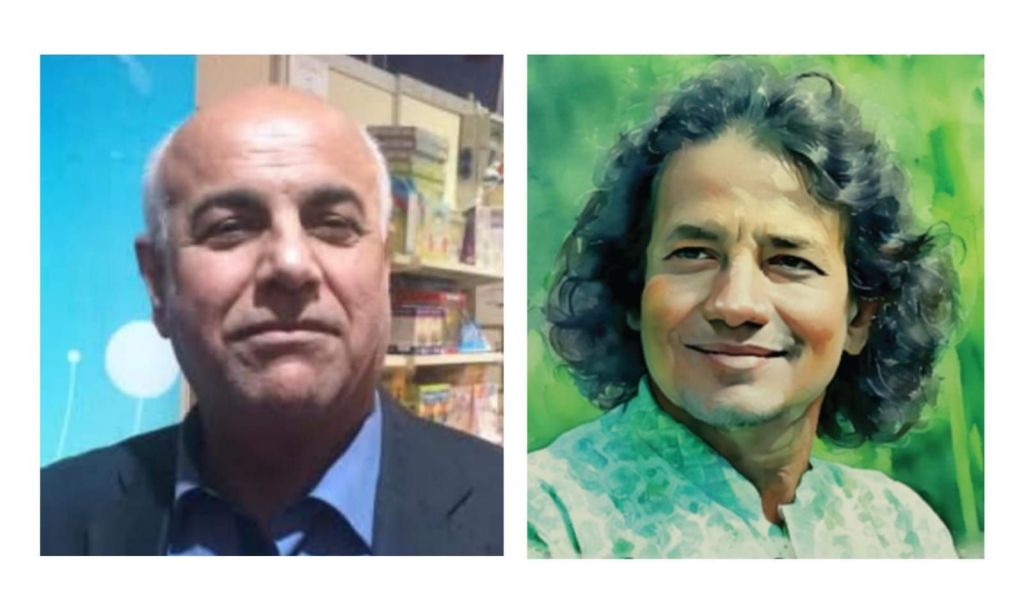
Di Niloy Rafiq – Bangladesh .
Una sottile riflessione sul linguaggio e l’immaginazione
Di Kareem Abdullah, Iraq .
La poesia di Niloy Rafiq ” Il Racconto delle Parole ” sembra trasportarci in un mondo quasi onirico dove linguaggio, natura ed emozioni umane si intersecano. Le prime battute hanno immediatamente creato una scena vivida: “Come l’onda d’urto della marea di un fiume da sogno”. Questa ondata metaforica, che simboleggia la natura fugace dei sogni e delle emozioni, trasporta dolcemente il lettore in un’esplorazione più profonda della connessione umana e dell’espressione. La cosa notevole è come questa “onda” ci riporti alla sua origine, proprio come una “luna nuova” ritorna nel suo spazio, suggerendo cicli di rinnovamento e riflessione.
La nozione di tempo ciclico emerge anche chiaramente nel secondo verso: “Ritorna alla sua origine, una luna nuova a dimorare”. È come se la poesia stessa riecheggiasse la natura eterna delle emozioni e dei ricordi: anche loro hanno i loro cicli, che si muovono tra gioiosi ricongiungimenti e momenti di nostalgia. Qui, la “luna nuova” potrebbe simboleggiare la speranza o un nuovo inizio, ma evoca anche della tranquilla solitudine che spesso troviamo nella riflessione. È la bellezza degli opposti: che si uniscono e poi si separano di nuovo.
Mentre la poesia procede, si percepisce un senso palpabile di armonia nel modo in cui le emozioni si fondono. “In unione esultante, le emozioni si fondono così dolcemente” sembra quasi musicale, come la melodia di vecchi amici che si riuniscono. Conosciamo tutti quella sensazione di connessione inespressa quando volti familiari si incontrano nella felicità. Il verso evoca una certa nostalgia, ma non del tipo malinconico; celebra piuttosto la gioia di riscoprire legami un tempo ritenuti perduti o dimenticati.
Le immagini in “Ospiti adornati con amore, cura e delizia” approfondiscono questo tema, facendo pensare al lettore di un raduno, un invito a un mondo di calore, apertura e ospitalità. Le porte sono “spalancate”, lasciando entrare non solo ospiti letterali ma anche elementi astratti come la comprensione, la pace e il rispetto reciproco. I “colori vividi e luminosi” evocano una celebrazione della vita, un momento in cui tutto si sente al suo apice, vivo e puro.
Una delle immagini più accattivanti della poesia, tuttavia, è come gli “occhi del sognatore” ci permettano di vedere il mondo attraverso una lente diversa. Questi “occhi” non sono solo un passaggio verso la realtà esterna, ma un canale per le verità interiori: “ciò che è più caro appare.” Questo sembra quasi un riconoscimento del fatto che le parti più preziose della vita sono spesso invisibili agli occhi e rivelate solo attraverso la nostra visione interiore.
Nel momento in cui la poesia ci porta alla strofa finale, veniamo introdotti ad un’immagine surreale, quasi ossessionante di “cigni insonni” nella tana ombreggiata della foresta. Questo potrebbe simboleggiare la ricerca implacabile di arte o del significato: “creature che sono costantemente svegli”, in costante ricerca. L’ambientazione qui è molto lontana dalla celebrazione iniziale di luce e calore, offrendo un contrasto che enfatizza il peso della creazione, la fatica dell’ impegno artistico. I cigni, spesso simboli di bellezza e grazia, sembrano qui appesantiti dalla loro stessa esistenza incessante.
I versi finali, in cui ” si dipana una storia dove il tempo e l’arte collidono”, presentano una profonda meditazione sulla natura stessa dell’esistenza. Forse, in questo verso, Niloy Rafiq, non si riferisce solo alla collisione di due concetti astratti ma alla lotta perpetua nel tentativo di catturare gli attimi fugaci della vita, momenti che scivolano via anche mentre cerchiamo di trattenerli. È il punto d’incontro tra percezione (tempo) ed espressione (arte), dove entrambi trascendono l’ordinario e si insinuano nel regno dell’eterno.
In questo modo, la poesia di Rafiq sembra dirci che il linguaggio stesso è un ponte tra i momenti fugaci e i loro eterni echi, tra il visibile e l’occulto. Il Racconto delle Parole è sia una celebrazione della connessione umana che una riflessione tranquilla sui limiti della comprensione. Le parole, le emozioni, i paesaggi: tutto sembra esistere in un equilibrio delicato, dove nulla è statico, e tutto è connesso, eppure sempre mutevole.
Il Racconto delle Parole
Niloy Rafiq
Come l’onda d’urto di un fiume di sogni,
Ritorna alle sue origini, una luna nuova da dimorare.
Nell’unione giubilante, le emozioni si fondono così dolcemente,
Volti familiari, amati, nella gioia si incontrano.
Gli ospiti adornati d’ amore, cura e delizia,
Porte spalancate, colori vivaci e luminosi.
Attraverso gli occhi del sognatore appare ciò che è più caro,
Nel racconto delle parole, antiche grotte custodiscono la bellezza che incanta.
Leggendo mezzo addormentato sotto il bagliore ardente del sole,
Poesia ancora in attesa, con il canto degli uccellini nell’aria.
Nella tana ombreggiata della foresta dimorano cigni insonni,
Una storia si dipana dove il tempo e l’arte collidono.
Lettura poetica in italiano di Elisa Mascia
The Tale of Words
By Niloy Rafiq – Bangladesh .
A Subtle Reflection on Language and Imagination
By Kareem Abdullah, Iraq .
Niloy Rafiq’s poem “The Tale of Words” seems to draw us into an almost dreamlike world where language, nature, and human emotions intersect. The opening lines immediately set a vivid scene—“Like the breaking surge of a dream-river’s tide”. This metaphorical surge, which symbolizes the fleeting nature of dreams and emotions, gently carries the reader into a deeper exploration of human connection and expression. What’s remarkable is how this “surge” pulls us back toward its origin, just as a “new moon” returns to its own space, suggesting cycles of renewal and reflection.
The notion of cyclical time also emerges clearly in the second line: “Returns to its origin, a new moon to abide”. It’s as though the poem itself echoes the eternal nature of emotions and memories—how they, too, have their cycles, moving between joyous reunions and moments of longing. Here, the “new moon” could symbolize hope or a fresh beginning, yet it also speaks to the quiet solitude we often find in reflection. It’s the beauty of opposites—coming together and separating again.
As the poem transitions, there’s a palpable sense of harmony in the way emotions merge. “In jubilant union, emotions blend so sweet” feels almost musical, like the melody of old friends reuniting. We all know that feeling—the unspoken connection when familiar faces meet in happiness. The line evokes a certain nostalgia, but not of the melancholic kind; rather, it celebrates the joy of rediscovering bonds once thought lost or forgotten.
The imagery in “Guests adorned with love, care, and delight” expands on this theme, making the reader think of a gathering, an invitation to a world of warmth, openness, and hospitality. The doors are “wide open,” letting in not just literal guests but also abstract elements like understanding, peace, and mutual respect. The “vivid and bright colors” bring to mind a celebration of life, a moment where everything feels at its peak, vivid and pure.
One of the most compelling images in the poem, though, is how the “dreamer’s eyes” allow us to see the world through a different lens. These “eyes” are not just a passage into external reality but a conduit for internal truths—the “dearest appears.” This feels like an acknowledgment that the most cherished parts of life are often invisible to the eye and only revealed through our inner vision.
By the time the poem takes us to the final stanza, we are introduced to a surreal, almost haunting image of “sleepless swans” in the shadowed lair of the forest. This might symbolize the unrelenting pursuit of art or meaning—creatures that are constantly awake, constantly seeking. The setting here is far removed from the initial celebration of light and warmth, offering a contrast that emphasizes the weight of creation, the fatigue of artistic endeavor. Swans, often symbols of beauty and grace, here seem burdened by their own ceaseless existence.
The final lines, where “a story unfolds where time and art collide,” present a profound meditation on the nature of existence itself. Perhaps, in this line, Niloy Rafiq is not just talking about the collision of two abstract concepts but the perpetual struggle of trying to capture the fleeting moments of life—moments that slip away even as we try to hold on to them. It is the meeting point between perception (time) and expression (art), where both transcend the ordinary and move into the realm of the eternal.
In this way, Rafiq’s poetry seems to tell us that language itself is a bridge between fleeting moments and their eternal echoes, between the visible and the hidden. The Tale of Words is both a celebration of human connection and a quiet reflection on the limits of understanding. The words, the emotions, the landscapes—all seem to exist in a delicate balance, where nothing is static, and everything is connected, yet always shifting.
The Tale of Words
Niloy Rafiq
Like the breaking surge of a dream-river’s tide,
Returns to its origin, a new moon to abide.
In jubilant union, emotions blend so sweet,
Familiar faces, beloved, in joy they meet.
Guests adorned with love, care, and delight,
Doors wide open, colors vivid and bright.
Through the dreamer’s eyes, the dearest appears,
In the tale of words, ancient caves hold beauty that endears.
Reading half-asleep beneath the blazing sun’s glare,
Poetry still expectant, with birdsong in the air.
In the forest’s shadowed lair, sleepless swans reside,
A story unfolds where time and art collide.
Translator: Nurul Hoque
Leggi anche 👇
Il prof Kareem Abdullah -Iraq dalla lettura critica della poesia: “Il Racconto delle Parole” di Niloy Rafik – Bangladesh, scrive: “Una sottile riflessione sul linguaggio e l’immaginazione”. Pubblicazione di Elisa Mascia -Italia
 Magiche Emozioni dell'Anima