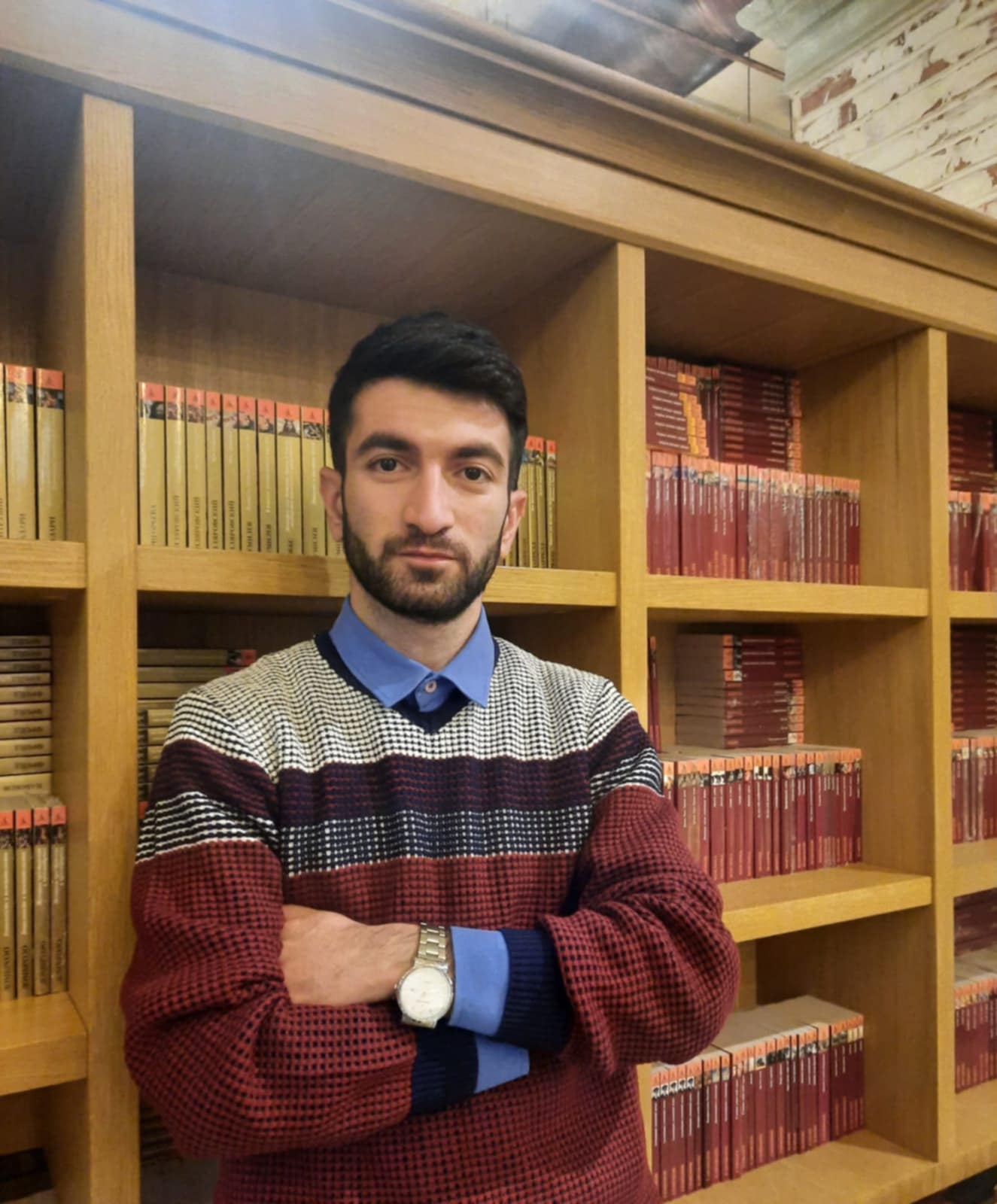
Foto cortesia di Nijat Hunalp – Azerbaigian
Nijat Hunalp è un poeta e scrittore azero. È nato nel 1996 nella città di Mingachevir. È membro dell’Unione degli Scrittori dell’Azerbaigian e dell’Unione Mondiale dei Giovani Scrittori Turchi. Le sue poesie si sono classificate al terzo posto al premio letterario “Fergana” e sono state inserite nella long list del premio “Vagif Samadoglu”. Le sue poesie e i suoi racconti sono stati pubblicati sui portali nazionali “Kulis.az”, “Edabiyyat.az”, “Letteratura e Arte”, “Partizan.az”, Manera.az, Dalidag.az”, “Zerif Kölgeler”, “525”, “Edabi – Eks Seda”, “Butov Azerbaijan”, sulle riviste turche “Yaşam Fanzin”, “Güfte Edabiyyat”, “An”, “Yitik Bavul”, “Bayguş”, “İhtilal”, Taşköprü, sul quotidiano “Krymın Sesi”, sui portali “Dibace.net”, “Dergizan.com”, sul quotidiano iraniano Sanjak, sui quotidiani uzbeki “Ezgulik” e “Adobiyyat Olami”.
Le sue poesie sono state tradotte in inglese e uzbeko.
MARCIA DELLA MORTE
Nella città delle persone sole sono nel seminterrato
della stanza chiamata
disperazione.
E le pupille dei miei occhi
sembrano la talpa
che può vedere la luce da
molto lontano
per molti chilometri.
I miei vestiti odorano di morte
passo dopo passo.
Ho tracannato l’aceto
che avevo comprato ieri.
Come lo schiavo egiziano assetato
fraternizzo con la morte
tra le mura umide dell’ospedale.
Il faggio soffia via le foglie dal cielo
nel cortile.
Le mie sorelle e i miei fratelli
nascono dal mio spirito silenzioso e solitario.
E ogni nascita porta con sé
le lacrime.
IL CIELO È LA DIMORA DEGLI SPIRITI
Come nessuno sulla Terra
anche il poeta non fu fortunato.
Ho colto un fiore dal mio cuore
per l’ape che era rimasta senza fiore.
Le corde del mio cuore sono amiche del dolore
Per me, per portare il dolore quando morirò.
Non ho lasciato che i miei desideri invecchiassero
Di essere una ragazza single.
Niente è più alto della morte
Il corpo senza spirito non è nulla.
Il cielo è la dimora dello spirito
Si rifugiano presso Dio.
DOVE I CAVALLI PORTARONO I PADRI?
Sia la spada che la freccia
si mescolarono alla terra,
Dove i cavalli portarono i padri?
Quelle urla, quei lamenti risuonano ancora nelle mie orecchie
Dove i cavalli portarono i padri?
Quei cavalli più gagliardi avevano visto molti combattimenti
Le criniere dei cavalli imbrigliati erano coperte di sangue
Quei cavalli corsero verso la morte
Dove i cavalli portarono i padri?
Infuriavano nei combattimenti o nelle battaglie
Erano infuriati nelle battaglie.
Erano più veloci del vento,
erano come uccelli.
Dove hanno portato i cavalli i padri?
Dove sono quei cavalli dei desideri,
dove sono i cavalli della fortuna?
Dove sono i khakan delle proprietà,
i cavalli dei troni?
I secoli hanno trasformato quei cavalli in storia.
Dove hanno portato i cavalli i padri?
I figli che sono morti lasciando le spade nel fodero,
I figli il cui destino li ha delusi.
Ehi, figli coraggiosi, se lo sapete, ditemelo anche voi.
Dove hanno portato i cavalli i padri?
Il mondo e i cavalli hanno la stessa età.
I cavalli sono sempre stati gli amici dei combattenti.
Ehi, mia memoria di cavallo, sussurrami all’orecchio:
Dove hanno portato i cavalli i padri?
In quali direzioni hanno svoltato quelle strade e quel sentiero?
Quanto è difficile reggere il peso della storia
Ehi, chiama il mio cavallo pazzo, mio cavallo da corsa,
Dove i cavalli hanno portato i padri?
I loro corpi sono sulla Terra,
ma i loro spiriti sono in cielo,
Ci sono paura e ansia nei loro occhi.
I cavalli hanno seguito le tracce dei padri
Dove i padri hanno portato i cavalli?
Dove i cavalli hanno portato i padri?
Nijat HUNALP,
Tradotto da: Sevil GULTEN
Nijat Hunalp is an Azerbaijani poet and writer. He was born in 1996 in the city of Mingachevir. He is a member of the Azerbaijan Writers’ Union and the World Young Turk Writers’ Union. His poems were awarded third place in the “Fergana” literary award and were included in the long list of the “Vagif Samadoglu” award. His poems and stories have been published on the country’s “Kulis.az”, “Edabiyyat.az”, “Literature and Art”, “Partizan.az”, Manera.az, Dalidag.az”, “Zerif Kölgeler” portals, “525”, “Edabi – Eks Seda”, “Butov Azerbaijan” newspapers, Turkey’s “Yaşam Fanzin”, “Güfte Edabiyyat”, “An”, “Yitik Bavul”, “Bayguş”, “İhtilal” magazines, Taşköprü, “Krymın Sesi” newspaper, “Dibace.net”, “Dergizan.com” portals, Iran’s Sanjak newspaper, Uzbekistan’s “Ezgulik”, “Adobiyyat Olami” newspapers.
His poems have been translated into English and Uzbek.
DEATH MARCH
In the city of lonely people
I am in the basement
of the room called as
hopelessness.
And the apples of my eyes
look like the mole
which can see the light from
the far distance
for many miles.
My clothes smell death
step after step.
I gulped the vinegar
that I had bought yesterday.
Like the thirsty Egyptian slave
I fraternize with the death
among the damp walls of the hospital.
The beech tree blows its leaves off the sky
in the yard.
My sisters and brothers
are born from my silent and lonely spirit.
And each birth brings tears
with itself.
THE SKY IS THE HOME OF SPIRITS
As nobody on the earth
The poet also wasn’t lucky.
I picked a flower from my heart
For the bee that was left without flower.
The strings of my heart are the friend of grief
For me to take the grief when I die.
I didn’t let my wishes to get older
To be spinsters like the girls.
Nothing is higher than the death
The body without spirit is nothing.
The sky is the home of the spirit
They took shelter at the God.
WHERE DID THE HORSES TAKE THE FATHERS?
Both the sword and arrow mixed with the soil,
Where did the horses take the fathers?
Those screams, moaning still are ringing in my ears
Where did the horses take the fathers?
Those courser horses had seen a lot of fights
The manes of the bridled horses were covered with blood
Those horses ran towards the death
Where did the horses take the fathers?
They raged in the fights or battles
They were infuriated in the battles.
They were faster than the wind, they were like birds
Where did the horses take the fathers?
Where are those wish horses, where are luck horses?
Where are the khakans of properties, horses of thrones?
The centuries turned those horses into the history
Where did the horses take the fathers?
The sons who died leaving their swords in the scabbard,
The sons whose fates made them let down.
Hey, brave sons, if you know tell me too
Where did the horses take the fathers?
The world and the horses are at the same age
The horses were always the friends of the fighters.
Hey, my horse memory, whisper into my ears,
Where did the horses take the fathers?
Into which directions did these roads and path turn?
How hard is holding the load of the history
Hey, my crazy horse , my course horse, call
Where did the horses take the fathers?
Their bodies are on the earth, but their spirits are on the heaven,
There are fear and anxiety in their eyes.
The horses followed the traces of the fathers
Where did the fathers take the horses?
Where did the horses take the fathers?
Nijat HUNALP,
Translated by: Sevil GULTEN
 Magiche Emozioni dell'Anima