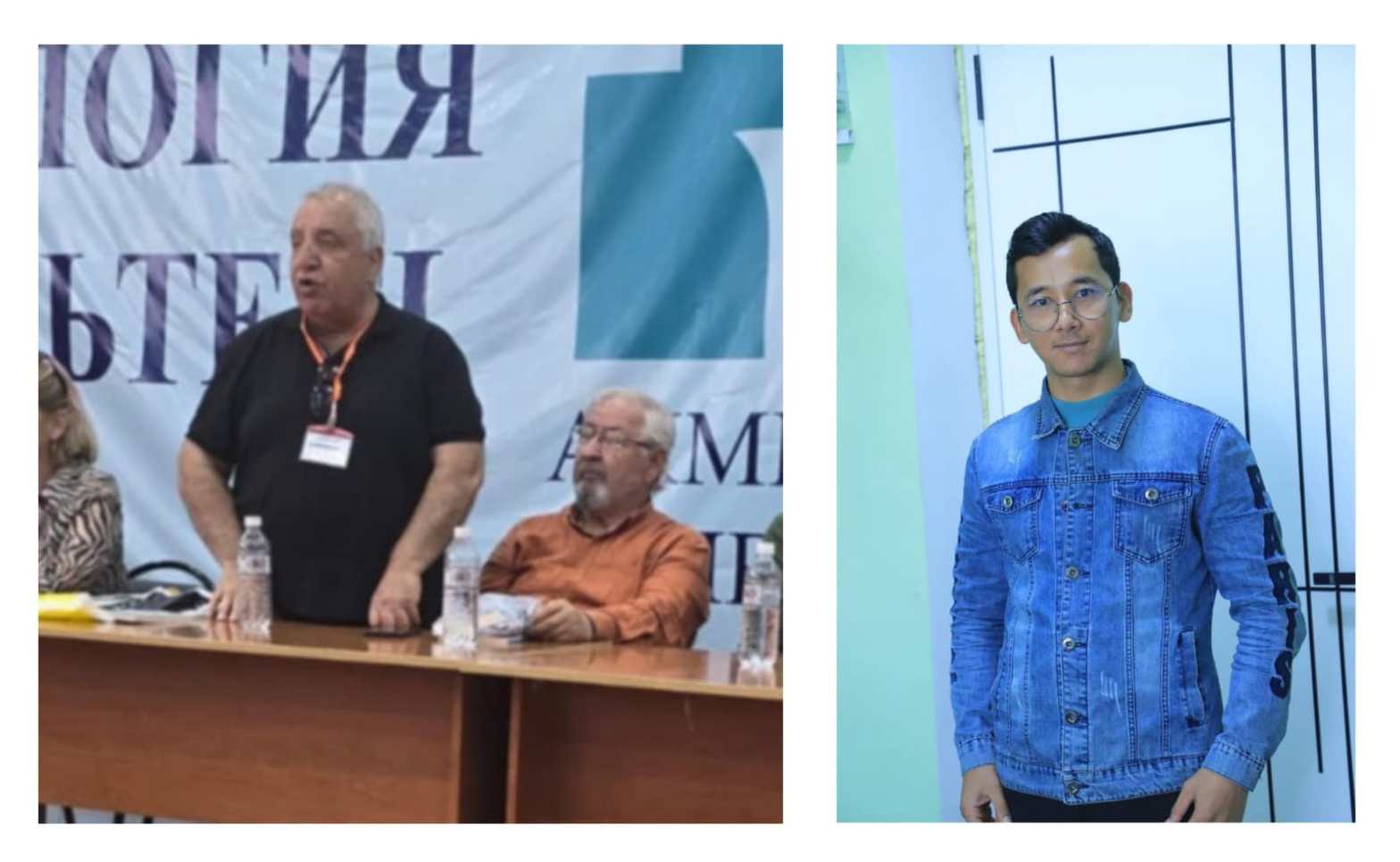
Foto cortesia di Coşkun Qarabulut – Turchia e Jahongir Nomozov- Azerbaigian
IL MIO PIÙ GRANDE PRINCIPIO È:
Il nostro interlocutore è il noto poeta, giornalista e traduttore turco Coşkun Qarabulut. La nostra discussione ruotava intorno alla letteratura, alla poesia, alle opinioni personali e al ruolo dei poeti e degli scrittori nella società odierna.
-Come percepisci il rapporto tra ispirazione e stato mentale nel processo di scrittura della poesia?
—Secondo me, l’ispirazione è l’essenza dell’esistenza della poesia, anche se è solo una parola che ti sussurra all’orecchio. L’ispirazione è come un tocco divino alla poesia. L’anima della poesia è nascosta in questa ispirazione. Ci sono poeti che scrivono con esperienza e accumulazione di conoscenza, naturalmente. Ma credo che tali poesie mancano di anima. La poesia, come un essere umano, deve avere sia un’anima che un corpo. L’ispirazione è ascoltare una voce che proviene dalle profondità dell’anima, e l’esistenza di quella voce costituisce il significato della poesia. La poesia dovrebbe esistere nella traccia di un cuore, non solo con la mente ma anche con la voce del cuore.
-Quali ostacoli incontrate più spesso nel vostro processo creativo?
—Nessun ostacolo può fermarmi nel processo di scrittura. Finché la mia capacità di pensare, mente e cuore sono sani, niente può impedirmi. Tuttavia, il processo di preparazione di un libro è una storia completamente diversa. Pubblicare un libro è davvero un’impresa costosa. Inoltre, il numero di lettori è piuttosto piccolo, soprattutto quando si tratta di generi come la poesia e gli scritti filosofici. I libri popolari vendono molto, ma la poesia, i pensieri profondi o i testi che toccano l’anima umana raramente attirano l’attenzione. Tuttavia, nonostante le difficoltà di questo processo, continuare a scrivere è un modo per me di far emergere la verità dentro di me. A volte la scrittura è fatta solo per trovare se stessi.
-Come poeta, come definiresti i concetti di umanità ed etica? Come li incorpori nella tua poesia?
—Il mio più grande principio è di essere un primo umano. Essere virtuosi, vivere con coscienza e verità, e solo allora diventare un poeta, scrittore, artista o qualsiasi professione si scelga. Una persona deve innanzitutto essere umana. Se un poeta non crede in ciò che scrive e non vive secondo esso, allora le sue parole sono prive di significato. Le parole di un poeta sono l’eco della sua anima; se quell’anima non è genuina e sincera, il lettore la sentirà. La scrittura non è solo la danza delle parole, è l’espressione di un’anima.
-Qual è la più alta virtù umana per te, e come cerchi di preservarla?
—La sincerità è la cosa più importante per me. Non voglio mai usare nessuno o agire per interesse personale nei miei scritti, pensieri o vita. Essere sinceri, esprimere le cose dal cuore e con onestà, è molto importante. La vera sincerità richiede una vita libera dal materialismo o dall’egoismo. Credo che riflettendo il mio vero io, sto seguendo la strada giusta sia come persona che come artista. La sincerità è per me la caratteristica più essenziale della scrittura.
-Quale ruolo giocano gli amici e la famiglia nella tua vita di creatore?
—Uno dei principali fattori che influenzano uno stato creativo è la capacità di una persona di trovare la sua armonia interiore. Un ambiente fisico confortevole aiuta i pensieri a fluire liberamente. Per una persona creativa, il ruolo della famiglia e degli amici è significativo; essi non solo forniscono sostegno ma servono anche come fonti di ispirazione. L’ambiente familiare è cruciale per una persona creativa per esprimersi e trovare la pace interiore. Una famiglia pacifica è la prima fonte che nutre lo spirito creativo. Così, lo sviluppo del pensiero creativo è strettamente collegato non solo all’ambiente esterno, ma anche alle persone intorno a te.
-Come si riflette il mondo interiore e l’umore di un poeta nella loro poesia? In che modo questi stati d’animo modellano le tue poesie?
—Un poeta non dovrebbe scrivere senza regolare il proprio umore, perché il poeta deve prima avere uno stato d’animo che sarà un esempio. Devono aver deciso come passare dal transitorio e temporaneo all’eterno e assoluto, all’ultimo, all’infinito, in se stessi, per rifletterlo nelle loro opere ed essere una guida. In caso contrario, nessuno ha il tempo di affrontare lo stato d’animo sparso di un poeta.
-Chi sono i rappresentanti della letteratura turca che ti ispirano di più? In che modo le loro opere hanno influenzato il tuo processo creativo?
—Dai classici, Yunus Emre, Ali Shir Nevai e Ahmet Yesevi mi hanno ispirato a scoprire la bellezza eterna e la verità della vita, non i suoi aspetti temporanei. Le loro parole piene di sapienza toccano il profondo dell’anima umana. Per quanto riguarda i moderni, le poesie sociali di Nazım Hikmet, i riferimenti di Özdemir Asaf al mondo interiore di un essere umano, i pensieri di Melih Cevdet Anday sulle difficoltà del mondo moderno e la ricerca del senso della vita attraverso il sorriso di Sunay Akın hanno plasmato il mio stile poetico. Questi poeti hanno avuto un impatto significativo su di me sia in termini di linguaggio che di significato.
-Qual è la cosa più importante per voi quando esprimete i vostri pensieri personali in letteratura?
-La poesia è una ricerca di luce che cerca
IL MIO PIÙ GRANDE PRINCIPIO È
Il nostro interlocutore è il noto poeta, giornalista e traduttore turco Coşkun Qarabulut. La nostra discussione ruotava intorno alla letteratura, alla poesia, alle opinioni personali e al ruolo dei poeti e degli scrittori nella società odierna.
-Come percepisci il rapporto tra ispirazione e stato mentale nel processo di scrittura della poesia?
—Secondo me, l’ispirazione è l’essenza dell’esistenza della poesia, anche se è solo una parola che ti sussurra all’orecchio. L’ispirazione è come un tocco divino alla poesia. L’anima della poesia è nascosta in questa ispirazione. Ci sono poeti che scrivono con esperienza e accumulo di conoscenza, naturalmente. Ma io credo che tali poesie mancano di anima. La poesia, come un essere umano, deve avere sia un’anima che un corpo. L’ispirazione è ascoltare una voce che proviene dalle profondità dell’anima, e l’esistenza di quella voce costituisce il significato della poesia. La poesia dovrebbe esistere nella traccia di un cuore, non solo con la mente ma anche con la voce del cuore.
-Quali ostacoli incontrate più spesso nel vostro processo creativo?
—Nessun ostacolo può fermarmi nel processo di scrittura. Finché la mia capacità di pensare, mente e cuore sono sani, niente può impedirmi. Tuttavia, il processo di preparazione di un libro è una storia completamente diversa. Pubblicare un libro è davvero un’impresa costosa. Inoltre, il numero di lettori è piuttosto piccolo, soprattutto quando si tratta di generi come la poesia e gli scritti filosofici. I libri popolari vendono molto, ma la poesia, i pensieri profondi o i testi che toccano l’anima umana raramente attirano l’attenzione. Tuttavia, nonostante le difficoltà di questo processo, continuare a scrivere è un modo per me di far emergere la verità dentro di me. A volte la scrittura è fatta solo per trovare se stessi.
-Come poeta, come definiresti i concetti di umanità ed etica? Come li incorpori nella tua poesia?
—Il mio più grande principio è di essere un primo umano. Essere virtuosi, vivere con coscienza e verità, e solo allora diventare un poeta, uno scrittore, un artista o qualsiasi altra professione si scelga. Una persona deve innanzitutto essere umana. Se un poeta non crede in ciò che scrive e non vive secondo esso, allora le sue parole sono prive di significato. Le parole di un poeta sono l’eco della sua anima; se quell’anima non è genuina e sincera, il lettore la sentirà. La scrittura non è solo la danza delle parole, è l’espressione di un’anima.
-Qual è la più alta virtù umana per te, e come cerchi di preservarla?
—La sincerità è la cosa più importante per me. Non voglio mai usare nessuno o agire per interesse personale nei miei scritti, pensieri o vita. Essere sinceri, esprimere le cose dal cuore e con onestà, è molto importante. La vera sincerità richiede una vita libera dal materialismo o dall’egoismo. Credo che riflettendo il mio vero io, sto seguendo la strada giusta sia come persona che come artista. La sincerità è per me la caratteristica più essenziale della scrittura.
-Quale ruolo giocano gli amici e la famiglia nella tua vita di creatore?
—Uno dei principali fattori che influenzano uno stato creativo è la capacità di una persona di trovare la sua armonia interiore. Un ambiente fisico confortevole aiuta i pensieri a fluire liberamente. Per una persona creativa, il ruolo della famiglia e degli amici è significativo; essi non solo forniscono sostegno ma servono anche come fonti di ispirazione. L’ambiente familiare è cruciale per una persona creativa per esprimersi e trovare la pace interiore. Una famiglia pacifica è la prima fonte che nutre lo spirito creativo. Così, lo sviluppo del pensiero creativo è strettamente collegato non solo con l’ambiente esterno, ma anche per le persone intorno a voi.
-Come si riflette il mondo interiore e l’umore di un poeta nella loro poesia? In che modo questi stati d’animo modellano le tue poesie?
—Un poeta non dovrebbe scrivere senza regolare il proprio umore, perché il poeta deve prima avere uno stato d’animo che sarà un esempio. Devono aver deciso come passare dal transitorio e temporaneo all’eterno e assoluto, all’ultimo, all’infinito, in se stessi, per rifletterlo nelle loro opere ed essere una guida. In caso contrario, nessuno ha il tempo di affrontare lo stato d’animo sparso di un poeta.
-Qual è la cosa più importante per voi quando esprimete i vostri pensieri personali in letteratura?
—La poesia è una ricerca di luce che cerca di rivelare gli strati nascosti della vita. È il desiderio di trovare le verità che stanno dietro ciò che è visibile e lasciano una traccia nell’infinito del tempo. Un poeta vuole accendere questa fiamma non solo nel proprio mondo interiore, ma anche nell’anima del lettore. Le parole sono desideri che sono pronti a ricostruire le loro ali e volare; ciascuno è una finestra che conduce ad un percorso, una realtà. Amare le profondità della vita, aprire gli occhi a quelle profondità e mostrarle alle persone è, in un certo senso, l’essenza stessa dell’esistenza.
-Quali sono le più grandi prove e difficoltà che hai affrontato? Come hanno influenzato queste esperienze il tuo processo creativo?
—Il più grande problema che ho affrontato nella mia vita è l’eccitazione di acquisire ricchezza e proprietà, anche da parte di coloro che dovrebbero sapere meglio che questo mondo è temporaneo, come le figure religiose che credono che rimarranno per sempre in questo mondo. Tuttavia, tutto ha una fine. L’esistenza in questo mondo è breve e fugace come una fiaba. La vera ricchezza si trova nella scoperta dell’eterno in questo mondo transitorio. Il più grande dovere di un poeta è quello di cercare la via verso l’eternità con un corpo mortale e invitare i suoi lettori a percorrere anche questa via. La vita è transitoria, ma in ogni momento di questo mondo transitorio, l’immortalità è nascosta. Il poeta chiama i suoi lettori a trovare un significato: “Realizzando il transitorio, sentire l’eterno.” Perciò, ogni poeta pone la sua esistenza non solo in questo mondo fugace ma anche per scoprire le verità oltre il tempo.
Ogni parola, ogni passo, ogni ala, è un passo compiuto sul sentiero dell’eternità.
Intervistato da:
Cahangir NAMAZOV,
Membro della redazione del giornale “Butov Azerbaijan” e della rivista “YAZARLAR”, rappresentante per l’Uzbekistan.
Membro del l’Unione dei giornalisti del l’Azerbaigian.
MY GREATEST PRINCIPLE IS TO BE A HUMAN FIRST
Our conversation partner is the well-known Turkish poet, journalist, and translator, Coşkun Qarabulut. Our discussion revolved around literature, poetry, personal views, and the role of poets and writers in today’s society.
—How do you perceive the relationship between inspiration and mental state in the process of writing poetry?
—In my opinion, inspiration is the essence of poetry’s existence, even if it’s just a single word whispering in your ear. Inspiration is like a divine touch to poetry. The soul of poetry is hidden within this inspiration. There are poets who write with experience and knowledge accumulation, of course. But I believe that such poems lack soul. Poetry, like a human being, must have both a soul and a body. Inspiration is hearing a voice coming from the depths of the soul, and that voice’s existence forms the meaning of the poem. Poetry should exist in the trace of a heart, not only with the mind but also with the voice of the heart.
—What obstacles do you most often face in your creative process?
—No obstacle can stop me in the writing process. As long as my thinking ability, mind, and heart are healthy, nothing can hinder me. However, the process of preparing a book is an entirely different story. Publishing a book is really an expensive endeavor. Plus, the number of readers is quite small, especially when it comes to genres like poetry and philosophical writings. Popular books sell a lot, but poetry, deep thoughts, or texts that touch the human soul rarely attract attention. Nevertheless, despite the difficulties of this process, continuing to write is a way for me to bring out the truth within me. Writing is sometimes done just to find oneself.
—As a poet, how would you define the concepts of humanity and ethics? How do you incorporate them into your poetry?
—My greatest principle is to be a human first. Being virtuous, living with conscience and truth, and only then becoming a poet, writer, artist, or whatever profession one chooses. A person must first and foremost be human. If a poet does not believe in what they write and does not live according to it, then their words are meaningless. A poet’s words are the echo of their soul; if that soul is not genuine and sincere, the reader will feel it. Writing is not just the dance of words, it is the expression of a soul.
—What is the highest human virtue for you, and how do you try to preserve it?
—Sincerity is the most important thing for me. I never want to use anyone or act out of self-interest in my writings, thoughts, or life. Being sincere, expressing things from the heart and with honesty, is very important. True sincerity requires a life free from materialism or selfishness. I believe that by reflecting my true self, I am following the right path both as a person and as an artist. Sincerity is the most essential characteristic of writing for me.
—What role do friends and family play in your life as a creator?
—One of the main factors influencing a creative state is a person’s ability to find their inner harmony. A comfortable physical environment helps thoughts flow freely. For a creative person, the role of family and friends is significant; they not only provide support but also serve as sources of inspiration. The family environment is crucial for a creative person to express themselves and find inner peace. A peaceful family is the first source that nourishes the creative spirit. Thus, the development of creative thought is closely connected not only to the external environment but also to the people around you.
—How does a poet’s inner world and mood reflect in their poetry? How do these moods shape your poems?
—A poet should not write without setting their mood right, because the poet must first have a state of mind that will be an example. They must have resolved how to move from the transient and temporary to the eternal and absolute, to the ultimate, to infinity, in themselves, in order to reflect this in their works and be a guide. Otherwise, no one has time to deal with the scattered state of mind of a poet.
—Who are the representatives of Turkish literature who inspire you the most? How have their works influenced your creative process?
—From the classics, Yunus Emre, Ali Shir Nevai, and Ahmet Yesevi have inspired me in discovering the eternal beauty and truth of life, not its temporary aspects. Their wisdom-filled words touch the depths of the human soul. As for the moderns, Nazım Hikmet’s social poems, Özdemir Asaf’s references to the inner world of a human being, Melih Cevdet Anday’s thoughts on the difficulties of the modern world, and Sunay Akın’s search for the meaning of life through creating a smile have shaped my poetic style. These poets have had a significant impact on me both in terms of language and meaning.
—What is the most important thing for you when expressing your personal thoughts in literature?
—Poetry is a search for light that tries
MY GREATEST PRINCIPLE IS TO BE A HUMAN FIRST
Our conversation partner is the well-known Turkish poet, journalist, and translator, Coşkun Qarabulut. Our discussion revolved around literature, poetry, personal views, and the role of poets and writers in today’s society.
—How do you perceive the relationship between inspiration and mental state in the process of writing poetry?
—In my opinion, inspiration is the essence of poetry’s existence, even if it’s just a single word whispering in your ear. Inspiration is like a divine touch to poetry. The soul of poetry is hidden within this inspiration. There are poets who write with experience and knowledge accumulation, of course. But I believe that such poems lack soul. Poetry, like a human being, must have both a soul and a body. Inspiration is hearing a voice coming from the depths of the soul, and that voice’s existence forms the meaning of the poem. Poetry should exist in the trace of a heart, not only with the mind but also with the voice of the heart.
—What obstacles do you most often face in your creative process?
—No obstacle can stop me in the writing process. As long as my thinking ability, mind, and heart are healthy, nothing can hinder me. However, the process of preparing a book is an entirely different story. Publishing a book is really an expensive endeavor. Plus, the number of readers is quite small, especially when it comes to genres like poetry and philosophical writings. Popular books sell a lot, but poetry, deep thoughts, or texts that touch the human soul rarely attract attention. Nevertheless, despite the difficulties of this process, continuing to write is a way for me to bring out the truth within me. Writing is sometimes done just to find oneself.
—As a poet, how would you define the concepts of humanity and ethics? How do you incorporate them into your poetry?
—My greatest principle is to be a human first. Being virtuous, living with conscience and truth, and only then becoming a poet, writer, artist, or whatever profession one chooses. A person must first and foremost be human. If a poet does not believe in what they write and does not live according to it, then their words are meaningless. A poet’s words are the echo of their soul; if that soul is not genuine and sincere, the reader will feel it. Writing is not just the dance of words, it is the expression of a soul.
—What is the highest human virtue for you, and how do you try to preserve it?
—Sincerity is the most important thing for me. I never want to use anyone or act out of self-interest in my writings, thoughts, or life. Being sincere, expressing things from the heart and with honesty, is very important. True sincerity requires a life free from materialism or selfishness. I believe that by reflecting my true self, I am following the right path both as a person and as an artist. Sincerity is the most essential characteristic of writing for me.
—What role do friends and family play in your life as a creator?
—One of the main factors influencing a creative state is a person’s ability to find their inner harmony. A comfortable physical environment helps thoughts flow freely. For a creative person, the role of family and friends is significant; they not only provide support but also serve as sources of inspiration. The family environment is crucial for a creative person to express themselves and find inner peace. A peaceful family is the first source that nourishes the creative spirit. Thus, the development of creative thought is closely connected not only to the external environment but also to the people around you.
—How does a poet’s inner world and mood reflect in their poetry? How do these moods shape your poems?
—A poet should not write without setting their mood right, because the poet must first have a state of mind that will be an example. They must have resolved how to move from the transient and temporary to the eternal and absolute, to the ultimate, to infinity, in themselves, in order to reflect this in their works and be a guide. Otherwise, no one has time to deal with the scattered state of mind of a poet.
—What is the most important thing for you when expressing your personal thoughts in literature?
—Poetry is a search for light that tries to reveal the hidden layers of life. It is the desire to find the truths that lie behind what is visible and leave a trace in the infinity of time. A poet wants to light this flame not only in their own inner world but also in the soul of the reader. Words are desires that are prepared to restore their wings and fly; each one is a window leading to a path, a reality. To love the depths of life, to open one’s eyes to those depths, and to show them to people is, in a way, the essence of existence itself.
—What are the biggest trials and difficulties you have faced? How did these experiences affect your creative process?
—The biggest problem I have faced in my life is the excitement of acquiring wealth and property, eve
MY GREATEST PRINCIPLE IS TO BE A HUMAN FIRST
Our conversation partner is the well-known Turkish poet, journalist, and translator, Coşkun Qarabulut. Our discussion revolved around literature, poetry, personal views, and the role of poets and writers in today’s society.
—How do you perceive the relationship between inspiration and mental state in the process of writing poetry?
—In my opinion, inspiration is the essence of poetry’s existence, even if it’s just a single word whispering in your ear. Inspiration is like a divine touch to poetry. The soul of poetry is hidden within this inspiration. There are poets who write with experience and knowledge accumulation, of course. But I believe that such poems lack soul. Poetry, like a human being, must have both a soul and a body. Inspiration is hearing a voice coming from the depths of the soul, and that voice’s existence forms the meaning of the poem. Poetry should exist in the trace of a heart, not only with the mind but also with the voice of the heart.
—What obstacles do you most often face in your creative process?
—No obstacle can stop me in the writing process. As long as my thinking ability, mind, and heart are healthy, nothing can hinder me. However, the process of preparing a book is an entirely different story. Publishing a book is really an expensive endeavor. Plus, the number of readers is quite small, especially when it comes to genres like poetry and philosophical writings. Popular books sell a lot, but poetry, deep thoughts, or texts that touch the human soul rarely attract attention. Nevertheless, despite the difficulties of this process, continuing to write is a way for me to bring out the truth within me. Writing is sometimes done just to find oneself.
—As a poet, how would you define the concepts of humanity and ethics? How do you incorporate them into your poetry?
—My greatest principle is to be a human first. Being virtuous, living with conscience and truth, and only then becoming a poet, writer, artist, or whatever profession one chooses. A person must first and foremost be human. If a poet does not believe in what they write and does not live according to it, then their words are meaningless. A poet’s words are the echo of their soul; if that soul is not genuine and sincere, the reader will feel it. Writing is not just the dance of words, it is the expression of a soul.
—What is the highest human virtue for you, and how do you try to preserve it?
—Sincerity is the most important thing for me. I never want to use anyone or act out of self-interest in my writings, thoughts, or life. Being sincere, expressing things from the heart and with honesty, is very important. True sincerity requires a life free from materialism or selfishness. I believe that by reflecting my true self, I am following the right path both as a person and as an artist. Sincerity is the most essential characteristic of writing for me.
—What role do friends and family play in your life as a creator?
—One of the main factors influencing a creative state is a person’s ability to find their inner harmony. A comfortable physical environment helps thoughts flow freely. For a creative person, the role of family and friends is significant; they not only provide support but also serve as sources of inspiration. The family environment is crucial for a creative person to express themselves and find inner peace. A peaceful family is the first source that nourishes the creative spirit. Thus, the development of creative thought is closely connected not only to the external environment but also to the people around you.
—How does a poet’s inner world and mood reflect in their poetry? How do these moods shape your poems?
—A poet should not write without setting their mood right, because the poet must first have a state of mind that will be an example. They must have resolved how to move from the transient and temporary to the eternal and absolute, to the ultimate, to infinity, in themselves, in order to reflect this in their works and be a guide. Otherwise, no one has time to deal with the scattered state of mind of a poet.
—Who are the representatives of Turkish literature who inspire you the most? How have their works influenced your creative process?
—From the classics, Yunus Emre, Ali Shir Nevai, and Ahmet Yesevi have inspired me in discovering the eternal beauty and truth of life, not its temporary aspects. Their wisdom-filled words touch the depths of the human soul. As for the moderns, Nazım Hikmet’s social poems, Özdemir Asaf’s references to the inner world of a human being, Melih Cevdet Anday’s thoughts on the difficulties of the modern world, and Sunay Akın’s search for the meaning of life through creating a smile have shaped my poetic style. These poets have had a significant impact on me both in terms of language and meaning.
—What is the most important thing for you when expressing your personal thoughts in literature?
—Poetry is a search for light that tries to reveal the hidden layers of life. It is the desire to find the truths that lie behind what is visible and leave a trace in the infinity of time. A poet wants to light this flame not only in their own inner world but also in the soul of the reader. Words are desires that are prepared to restore their wings and fly; each one is a window leading to a path, a reality. To love the depths of life, to open one’s eyes to those depths, and to show them to people is, in a way, the essence of existence itself.
—What are the biggest trials and difficulties you have faced? How did these experiences affect your creative process?
—The biggest problem I have faced in my life is the excitement of acquiring wealth and property, even by those who should know best that this world is temporary, such as religious figures who believe they will remain forever in this world. However, everything has an end. Existence in this world is as short and fleeting as a fairy tale. True wealth is found in discovering the eternal in this transient world. The greatest duty of a poet is to search for the path to eternity with a mortal body and invite their readers to walk this path as well. Life is transient, but within every moment in this transient world, immortality is hidden. The poet calls their readers to find meaning: “By realizing the transient, feel the eternal.” Therefore, every poet places their existence not only in this fleeting world but also to discover the truths beyond time.
Each word, each step, each wing, is a step taken on the path to eternity.
Interviewed by:
Cahangir NAMAZOV,
A member of the editorial team of “Butov Azerbaijan” newspaper and “YAZARLAR” magazine, representative for Uzbekistan.
Member of the Azerbaijan Journalists Union.
 Magiche Emozioni dell'Anima