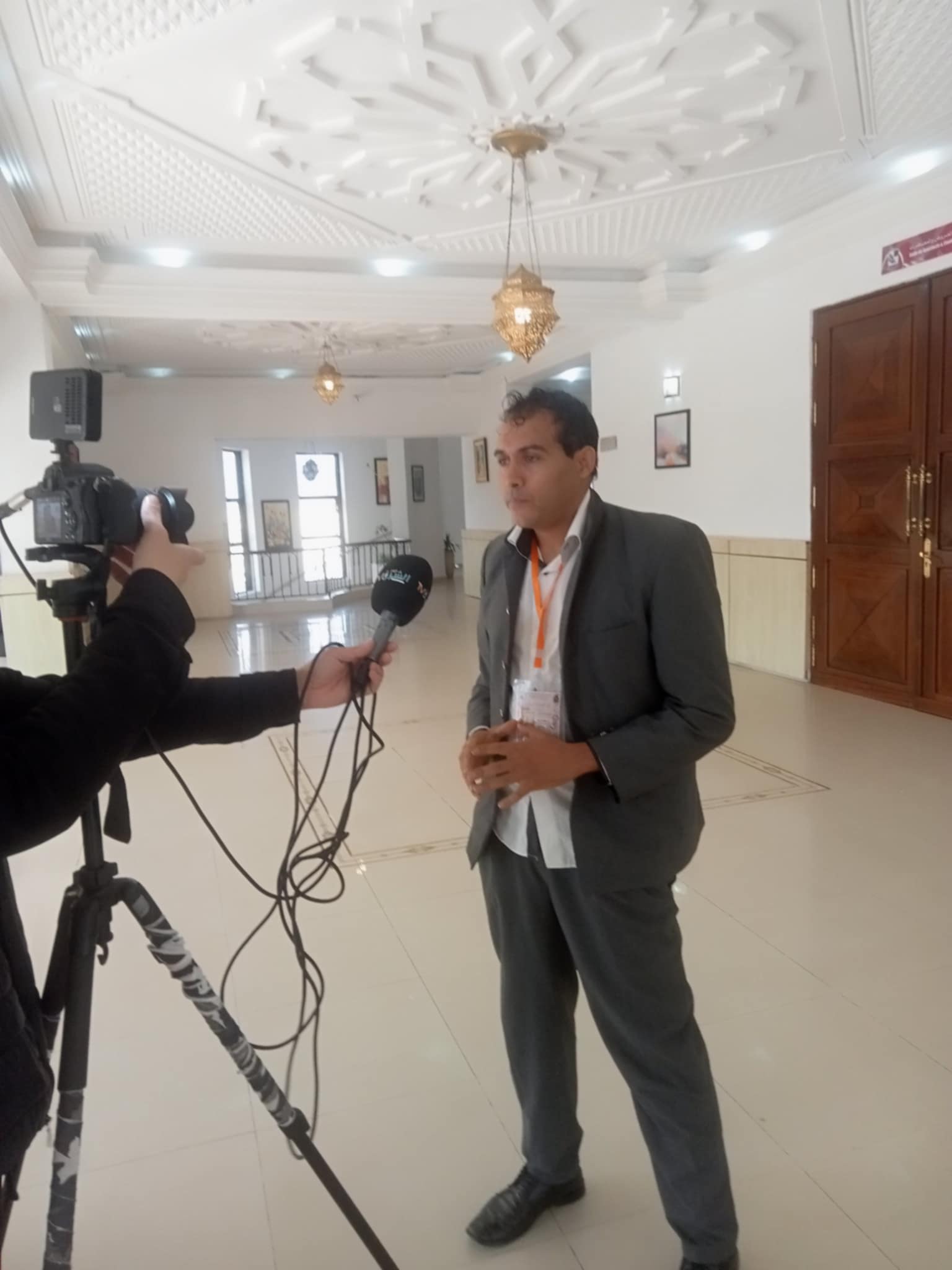
Foto cortesia di Mohamed Rahal
Mohamed Rahal
Una delle poesie più famose pronunciate nella storia della resistenza algerina tra il 1850 e il 1924
#Article_of_Folk_Heritage dal suo proprietario, il famoso poeta Mohamed Belkhair 1830////1895, scritta con desiderio, desiderio e supplica per il suo sceicco, il giusto santo Sidi Sheikha, chiamandolo Rahel Al-Bayda, che significa il cavaliere del cavallo bianco
#His_Life dal suo proprietario, il poeta Mohamed Belkhair della tribù Rizeigat, il ramo di Awlad Daoud, nacque secondo le stime tra il 1830 e il 1832 d.C. a Wadi Al-Maleh, sobborghi di Ain Temouchent, il che significa che nacque all’inizio dell’occupazione francese dell’Algeria, e questo è dimostrato dal suo detto, i Romani sono sconvolti e io sono a Sarbat Al-Ziyada, e la tribù Rizeigat in cui è cresciuto il poeta fa parte del gruppo di tribù “Aghouat Kassal” i cui accampamenti si trovano a est della città di #El-Bayadh, e conducono una vita nomade caratterizzata dal nomadismo, rifugiandosi in tende e praticando la professione di pastori. E la cavalleria e la poesia popolare, il poeta Mohamed Belkhair, che visse la sua infanzia e parte della sua adolescenza nel nord, ma crebbe con lo stile di vita della sua tribù e la sua personalità fu influenzata dal suo ambiente, la cui gente, nonostante la sua durezza, è caratterizzata da molte qualità e caratteristiche come la generosità, la lealtà al patto, l’amore per la libertà, la pazienza nelle avversità, la difesa della terra e dell’onore e la lotta all’ingiustizia indipendentemente dalla sua fonte, questo ambiente gli fece guadagnare molte esperienze e competenze, quindi il suo genio poetico fu celebrato presto e i suoi numerosi viaggi durante questo periodo nelle regioni degli altipiani e tra il deserto e la collina (nord), e il suo sedersi con giuristi e studiosi, e le sue poesie erano caratterizzate da lodi e monoteismo e lodava lo sceicco, il proprietario dell’ordine Sheikhi che si diramava dall’ordine Shadhili
. #Il_suo_ruolo_nella_resistenza_popolare Dopo la rivoluzione dei figli di Sidi Sheikh e delle tribù che si ribellarono con essa l’8 aprile 1864 contro la presenza francese nella regione, il poeta Mohamed Belkhair fu tra le fila dei rivoluzionari e svolse un ruolo di primo piano. In questa resistenza, ne fu il portavoce e svolse il ruolo e la missione di un organo di stampa, attraverso il suo orgoglio per l’eroismo dei rivoluzionari e l’elogio delle loro vittorie sugli altri francesi fino alla firma del trattato di pace di Brezina il 20 maggio 1883 tra i leader dei rivoluzionari e le autorità francesi. Per porre fine ai combattimenti tra le due parti, Mohamed Belkheir rifiutò questa pace nella sua interezza e si separò dal campo di Si Kaddour Ben Hamza, il quarto leader della rivoluzione di Ouled Sidi Sheikh, nonostante i tentativi di convincerlo e placarlo con tutti i mezzi, così si recò a El Menia nel tentativo di radunare sostenitori e raccogliere denaro e armi per rinnovare la rivoluzione e continuare la jihad, ma fallì fino a quando non fu arrestato intorno al 1886 ed esiliato a Calvi, sull’isola di Corsica, per decisione del governo del 18 gennaio 1887 con l’accusa di “disobbedienza” e incitamento alla rivoluzione contro la presenza francese nella regione. Fu imprigionato lì per 7 anni e poi rilasciato fino alla sua morte nel 1895.
#Fama_del_poema_come_canzone dopo l’indipendenza Questa poesia è stata una delle poesie più famose cantate dagli sceicchi della Kasbah e del Qallal durante gli anni Sessanta, e dopo che l’arte dell’opinione è diventata famosa negli anni Settanta, molti artisti l’hanno riportata in auge, il più famoso dei quali è Cheb Mami, perché è il figlio dello stato di Saida 1994 nel suo famoso album “Dalali” che è diventato famoso dopo quello ed è stato cantato nei più grandi teatri internazionali
Estratti dalla poesia “Andò ad Al-Bayda” del poeta Mohamed Belkhair Andò ad Al-Bayda Per l’amor di Dio, il tuo onore è una vergogna, non dimenticarmi Ti abbiamo portato la rettitudine Dove vagavano in ogni paese Mandami via, mio padrone, per l’onore dell’Arj, il padrone di Baghdad Mandami via, mio signore, così possiamo vedere la tua patria e la mia patria E chiedo di quelli che erano ancora i tuoi vicini Allora ero un professionista Dove hai costruito le tue cupole I miei vicini e restiamo vittoriosi con la giovinezza del tuo onore e le virtù dei tuoi figli, mio signore, vergogna di Dio, non mancarmi e non dimenticarmi Siamo d’accordo sull’amore, l’intenzione e la jihad, mio signore, vergogna di Dio, non mettermi in imbarazzo di fronte ai miei pari Sei il garante del mio onore e del mio onore E le barche.
Mohamed Rahal
One of the most famous poems that were said in the history of the Algerian resistance between 1850 ____ 1924
#Article_of_Folk_Heritage by its owner, the popular poet Mohamed Belkhair 1830////1895, written with longing, yearning and supplication for his sheikh, the righteous saint Sidi Sheikha, calling him Rahel Al-Bayda, meaning the rider of the white horse
#His_Life by its owner, the poet Mohamed Belkhair from the Rizeigat tribe, the branch of Awlad Daoud, was born according to estimates between 1830-1832 AD in Wadi Al-Maleh, the suburbs of Ain Temouchent, meaning that he was born at the beginning of the French occupation of Algeria, and this is evidenced by his saying, the Romans are upset and I am in Sarbat Al-Ziyada, and the Rizeigat tribe in which the poet grew up is one of the group of tribes “Aghouat Kassal” whose camps are located to the east of the city of #El-Bayadh, living a nomadic life characterized by nomadism, shelter in tents, and practicing the profession of herding. And chivalry and folk poetry, the poet Mohamed Belkhair, who lived his childhood and some of his adolescence in the north, but grew up on the lifestyle of his tribe and his personality was influenced by its environment, whose people, despite its harshness, are characterized by many qualities and characteristics such as generosity, loyalty to the covenant, love of freedom, patience in adversity, defense of land and honor, and fighting injustice no matter what its source, this environment gained him many experiences and expertise, so his poetic genius was celebrated early and his many travels during this period in the regions of the high plateaus and between the desert and the hill (north), and his sitting with jurists and scholars, and his poems were characterized by praise and monotheism and he praised the Sheikh, the owner of the Sheikhi order branching from the Shadhili order
. #His_role_in_the_popular_resistance After the revolution of the sons of Sidi Sheikh and the tribes that revolted with it on April 8, 1864 against the French presence in the region, the poet Mohamed Belkhair was among the ranks of the revolutionaries and played a prominent role In this resistance, he was its mouthpiece, and played the role and mission of a media outlet, through his pride in the heroism of the revolutionaries and praising their victories over the other French until the signing of the Brezina Peace Treaty on May 20, 1883 between the leaders of the revolutionaries and the French authorities. To end the fighting between the two parties, Mohamed Belkheir rejected this peace in its entirety, and separated from the camp of Si Kaddour Ben Hamza, the fourth leader of the Ouled Sidi Sheikh revolution, despite attempts to convince him and appease him by all means, so he traveled to El Menia in an attempt to rally supporters and collect money and weapons to renew the revolution, and continue the jihad, but he failed until he was arrested around 1886 and exiled to Calvi on the island of Corsica by a government decision on January 18, 1887 on charges of “disobedience” and inciting revolution against the French presence in the region. He was imprisoned there for 7 years and then released until he died in 1895.
#Fame_of_the_poem_as_a_song after independence This poem was one of the most famous poems sung by the sheikhs of the Kasbah and the Qallal during the sixties, and after the art of opinion became famous in the seventies, many artists brought it back, the most famous of whom is Cheb Mami, because he is the son of the state of Saida 1994 in his famous album “Dalali” which became famous after that and was sung in the largest international theaters
Excerpts from the poem “He went to Al-Bayda” by the poet Mohamed Belkhair He went to Al-Bayda For God’s sake, your honor is a disgrace, do not forget me We brought you righteousness Where did they roam in every country Send me away, my master, by the honor of the Arj, the master of Baghdad Send me away, my master, so that we may see your homeland and my homelands And I ask about the ones who were still your neighbors Then I was a professional Where did you build your domes My neighbors and we remain victorious with the youth of your honor and the virtues of your children, my master, God’s disgrace, do not miss me and forget me We agree on love, intention and jihad, my master, God’s disgrace, do not embarrass me in front of my peers You are the guarantor of my honor and my honor And the boats
 Magiche Emozioni dell'Anima