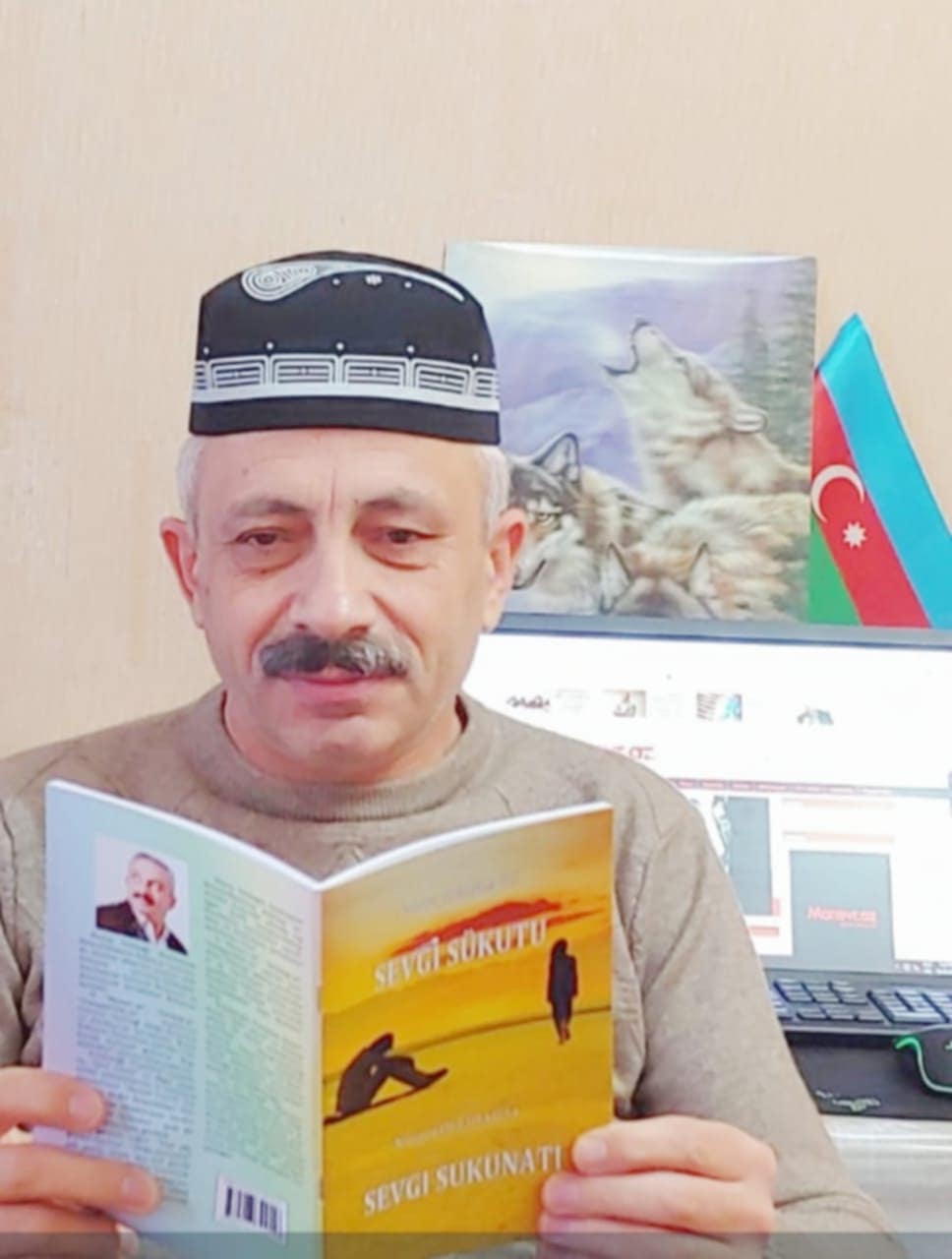
Foto cortesia di Namik Delidagli – Azerbaijan
CERCA LA LUCE DELLA SPERANZA ANCHE NEL DOLORE
Namik Delidagli, noto per il suo stile distintivo nella poesia moderna azera, è riconosciuto come un poeta che ha creato opere letterarie significative. Oggi, direi che il suo lavoro non è solo promosso in Azerbaigian ma in tutto il mondo turco. Come scrittore, N. Delidagli contribuisce in modo significativo alla letteratura riflettendo i suoi pensieri profondi, le sue riflessioni filosofiche e la ricchezza emotiva nella sua poesia. Le sue opere, che riecheggiano profondamente la vita, la cultura e la storia del popolo, hanno la capacità di affascinare i lettori attraverso periodi diversi. Tra i temi comuni della sua poesia vi sono le lotte interiori degli esseri umani, il tema senza tempo dell’amore, della libertà e dell’amore per la patria. Usa il potere delle parole per influenzare profondamente la mente dei suoi lettori e creare un’atmosfera emotiva con espressioni letterarie delicate. Nelle sue poesie, la lotta tra luce e oscurità e il toccare di questioni umane eterne riflettono la ricchezza filosofica dell’arte del poeta. In molte delle sue poesie, egli presenta al lettore non solo la bellezza ma anche profondi pensieri sociologici e filosofici. Nella poesia di Namik vediamo riflessioni profonde sul mondo interiore dell’essere umano, sull’amarezza della vita e sulla mancanza di senso dell’esistenza. Le sue poesie hanno un peso emotivo e una profondità filosofica. Nel poema che segue, il poeta descrive splendidamente gli sconvolgimenti spirituali dell’uomo moderno e le pene della vita attraverso il linguaggio artistico.
Fa male:
Mostrami un posto, andrò,
Non posso vivere, mio Dio.
Non posso nemmeno accarezzare
Mio caro dolore, mio Dio.
Nel poema “My God”, il poeta descrive la lotta per affrontare il peso della vita, cercando di portare quel fardello. Il poema inizia con una supplica a Dio, mostrando non l’impotenza del poeta davanti a Lui, ma piuttosto la sua accettazione delle difficoltà che la vita gli ha dato. Presenta anche la lotta interna del l’individuo, dettagliando la sua protesta e il suo conflitto interiore. Esprimendo l’impotenza dell’uomo e il peso della sua vita, il poeta esorta il lettore a riflettere e a valutare la propria vita.
Questo dolore non diminuisce,
cresce più lo sopporto.
All’esterno, mi rimpicciolisco,
ma dentro, il mio dolore cresce.
In “Questo dolore”, il poeta sottolinea la confusione psicologica e l’impotenza dell’individuo quando affronta lotte emotive. Il dolore è mostrato come una forza sempre crescente nella vita del poeta, che disturba il suo mondo interiore.
Non guardare indietro, non ho detto,
Non ho detto destino, guardalo,
Non ho detto che non c’è niente che voglio,
Ho dato tutto quello che avevo, cresce.
Di fronte alle difficoltà che la vita gli pone, il poeta non ha altra scelta che accettarle, eppure cerca un barlume di speranza nel suo dolore. Ma, a mio parere, non può ancora sfuggire al pessimismo e alla tristezza. In questa poesia, la lotta contro il proprio destino e talvolta la necessità di inchinarsi ad esso è espressa con delicatezza.
… Per chi non vuole arrendersi alla morte,
la loro vittoria è suicidio;
l’ultimo grido di chi ha sete del proprio sangue è suicidio;
tutte le proteste sono la voce della verità, il suicidio;
l’improvviso respiro dei sentimenti tagliati è suicidio.
Nel poema “Pensieri suicidi”, il poeta presenta una prospettiva complessa, ma diversa sui temi della morte e del suicidio. Le sue riflessioni sul suicidio rivelano come si riconcilia con i fardelli e le pene della vita. In questa poesia, il suicidio è raffigurato come una sorta di “vittoria.” Questa “vittoria” non è la fine della vita, ma piuttosto una separazione che simboleggia un’irreversibile dipartita.
… La morte ha un debito verso coloro che si suicidano.
Il suicidio non è morte,
il suicidio non è morire,
è solo una separazione:
ma non può essere invertita.
Direi anche che questa poesia è una chiamata a riconoscere i pensieri suicidi come fase finale della riconciliazione con la vita e la separazione. Simboleggia che il desiderio di morte è solo un trucco delle lotte della vita, e il personaggio sta cercando di trovare un modo per riconnettersi con l’esistenza.
Uomo autunno, questa stagione è appesa sulle spalle
come un cappotto vecchio stile.
Non ho visto
la pelliccia invernale. Ho atteso nei tuoi occhi
per quattro anni, bloccati in una stagione:
in un colore opaco.
Uomo autunno! Questa stagione
che indossi è vecchio.
Tu cammini verso
i tuoi ricordi, appesantiti dai desideri
che sono caduti dal tuo cuore.
Per il momento…
Nel poema “Autumn Man”, la stagione autunnale è ritratta come metafora del riflesso della vita umana. L’autunno simboleggia anche i desideri consumati e il passato dentro una persona. Attraverso l’immagine dell’ “uomo d’autunno” il poeta descrive il movimento della vita e del tempo, e come una persona può sentirsi gravata dal peso del passato. L’autunno, associato al silenzioso passaggio del tempo del poeta, rappresenta anche il suo attaccamento al passato e come esso lo radichi nei ricordi.
Mi hai mandato una foto…
In quell’immagine, tutto ha la sua propria immagine:
Il tuo sguardo ha la sua immagine,
il tuo cuore ha la sua immagine…
… Mi hai mandato una foto,
quanto era colorato…
Cospargerebbe di sale i miei dolori doloranti,
e essere “unguento” per loro…
Le mie pene sarebbero diventate blu,
non guariscono, rimangono umidi.
Da ora in poi, ogni volta
Guardo quella foto,
i miei occhi si intossicherebbero,
i miei sguardi brucerebbero…
Nel poema “The Picture Poem”, il poeta usa un’immagine come mezzo attraverso il quale le proprie emozioni, il dolore della nostalgia e la separazione, e il modo in cui il passato viene rianimato sono vividamente rappresentati. Per il poeta, l’immagine non è solo una memoria o rappresentazione visiva, ma anche uno strumento che espone i dolori del cuore e le tracce del passato. Il poema illustra come tutto dentro una persona si riflette attraverso l’immagine-dolore, la bruciatura del passato e nostalgia-tutti sono trasmessi attraverso questa immagine. Questa poesia dimostra il potere dei dettagli artistici e come essi sono collegati al mondo interno dell’individuo.
In breve, questa poesia descrive il rapporto nostalgico del poeta con il passato:
A volte ti ritrovi sulla strada,
a questo “posto rovinato”-
Quanto tempo è passato, un sospetto,
Mi sono aggrappata alla mia speranza.
Quando dico rovinato,
Intendo questa città.
La sua aria, la sua acqua senza di te,
Intendo questo veleno.
In questa poesia, la città colpita dalla partenza dell’amato, che ora si sente come una “rovina” per l’amante, è magistralmente raffigurata attraverso le parole, come l’individuo cerca rifugio nella solitudine all’interno di questa città. Il poeta sottolinea l’attaccamento al passato, come il tempo sfugge e il dolore che questa partenza porta. Il dolore della separazione e il rimpianto associato al passare del tempo sono al centro della poesia.
“Un inviato è venuto a voi, e siamo stati lasciati con la separazione”
Questa poesia presenta l’intenso stato emotivo dell’amore e della separazione. Attraverso l’immagine dell'”inviato”, il poeta raffigura la separazione come una sorta di decreto, illustrando la battaglia contro di essa. Qui, la separazione è rappresentata sia come un dolore fisico che emotivo. Il poema affronta il tema della separazione con dolore, ma anche con un tono naturale.
Una sera la tua porta è stata sbattuta,
Un inviato è venuto a voi, e siamo stati lasciati con la separazione.
Ancora una volta, non aveva cambiato la sua intenzione,
una nuova separazione in un vecchio indumento.
Nella poesia di Namik Delidagli, il tema principale ruota attorno al mondo interiore dell’essere umano, alle difficoltà che incontra la vita e alla forza di non lasciarsi sconfiggere da esse. Lo stile artistico del poeta presenta in modo molto efficace le profondità del cuore e lo stato angosciato dell’anima.
Le metafore nelle sue poesie riflettono la profondità delle emozioni e dei pensieri filosofici sull’esistenza umana. Ogni poesia mette il lettore di fronte al suo mondo interiore e gli mostra sia i lati naturali che a volte dolorosi della vita.
Delidagli incarna anche la storia, la cultura e lo spirito di lotta del popolo azero nelle sue opere. L’amore per la patria nella sua poesia non riflette semplicemente uno spazio geografico; descrive anche in modo bello l’antico spirito, cultura, moralità e fiducia in se stessi delle persone. Nei suoi poemi, l’amore per la patria non è solo sui confini fisici ma è anche legato alla storia della nazione e al suo futuro. Namik Delidagli, promuovendo l’identità nazionale del suo popolo, si sforza di trasmetterla alle generazioni future attraverso le parole e la letteratura.
Fino ad oggi, la creatività del poeta non è passata inosservata, ed è stata valutata in vari modi, con questo riconoscimento che continua nel tempo presente. Ha ricevuto numerosi riconoscimenti e ha raggiunto il successo sia a livello locale che internazionale. Le sue poesie sono state tradotte e diffuse in vari paesi stranieri.
Oggi, Namik Delidagli continua a contribuire allo sviluppo della letteratura azera con la sua creatività, cercando di migliorare il prestigio della vera letteratura e promuoverla in altri paesi. Le innovazioni poetiche che ha introdotto fin dalle prime fasi della sua carriera riflettono la ricchezza e la profondità del suo stile letterario. Namik Delidagli conserva i principi fondamentali della poesia classica azera, introducendo nuovi elementi, e ha anche assorbito la letteratura mondiale contemporanea nel suo modo unico.
La finezza linguistica, la ricchezza poetica e il simbolismo delle sue poesie sono molto apprezzate sia dai critici che dagli studiosi letterari. Una delle conquiste letterarie di Namik Delidagli è che le sue opere sono apprezzate non solo dagli amanti della poesia ma anche dai circoli accademici. Il poeta sta compiendo la sua missione nello sviluppo della poesia azera con dignità. Il suo impegno per creare un patrimonio letterario di valore per le generazioni future non passa inosservato.
Il successo del poeta continua a crescere. Crediamo che le sue opere ispireranno le generazioni future e serviranno come parte essenziale della letteratura azera per molti anni a venire. Delidagli, non solo come poeta ma anche come pensatore, filosofo e giornalista, serve la letteratura e la parola.
Il successo di Namik Delidagli non si limita al suo lavoro creativo personale. Egli è anche molto prezioso per il suo inestimabile contributo allo sviluppo della letteratura e della cultura nazionali. Le sue opere, sempre in risposta alle esigenze della nuova era e riflettendo lo spirito del popolo, portano speranza per il futuro luminoso della letteratura azera.
Namik Delidagli è una figura importante nella letteratura azera, sia con la sua personalità che con le sue opere. I profondi strati filosofici ed emotivi della sua poesia, come pure le sue analisi dell’amore per la patria e il mondo interiore degli uomini, lo hanno reso una delle figure più importanti della letteratura moderna. Valutare la sua creatività e il suo patrimonio letterario, trasmetterlo alle generazioni future e arricchire ulteriormente la letteratura azera in conformità con le esigenze dei tempi dovrebbe essere uno degli obiettivi chiave della letteratura contemporanea. Abbiamo infinite speranze per il successo di Namik Delidagli e siamo fiduciosi che le sue opere guideranno gli amanti della letteratura in futuro.
Jakhongir NOMOZOV,
Membro del comitato editoriale del giornale “Butov Azerbaijan”,
Rappresentante della rivista “YAZARLAR” in Uzbekistan,
Membro del l’Unione dei giornalisti del l’Azerbaigian.
HE SEEKS THE LIGHT OF HOPE EVEN IN THE PAIN
Namik Delidagli, known for his distinctive style in modern Azerbaijani poetry, is recognized as a poet who has created significant literary works. Today, I would say that his work is not only promoted in Azerbaijan but across the entire Turkish world. As a writer, N. Delidagli contributes significantly to literature by reflecting his deep thoughts, philosophical reflections, and emotional richness in his poetry. His works, deeply echoing the life, culture, and history of the people, have the ability to captivate readers across different periods. Common themes in his poetry include the inner struggles of humans, the timeless subject of love, freedom, and love for the homeland. He uses the power of words to deeply affect the minds of his readers and create an emotional atmosphere with delicate literary expressions. In his poems, the struggle between light and darkness and touching on eternal human issues reflect the philosophical richness of the poet’s art. In many of his poems, he presents not only beauty but also deep sociological and philosophical thoughts to the reader. In Namik’s poetry, we see profound reflections on the inner world of the human being, the bitterness of life, and the meaninglessness of existence. His poems carry both emotional weight and philosophical depth. In the following poem, the poet beautifully depicts the spiritual upheavals of modern man and the pains of life through artistic language.
It hurts:
Show me a place, I’ll go,
I can’t live, my God.
I can’t even caress
my dearest pain, my God.
In the poem “My God,” the poet describes the struggle of confronting the weight of life, trying to carry that burden. The poem begins with a plea to God, showing not the poet’s helplessness before Him, but rather his acceptance of the difficulties life has given him. It also presents the internal struggle of the individual, detailing his protest and inner conflict. By expressing the human’s helplessness and the weight of his life, the poet urges the reader to reflect and value their own life.
This pain doesn’t decrease,
it grows the more I bear it.
On the outside, I shrink,
but inside, my pain grows.
In “This Pain,” the poet emphasizes the psychological turmoil and helplessness of the individual when facing emotional struggles. The pain is shown as an ever-growing force in the poet’s life, disturbing his inner world.
Don’t look back, I didn’t say,
I didn’t say fate, look at it,
I didn’t say there is nothing I want,
I gave everything I had, it grows.
Faced with the difficulties life brings, the poet has no choice but to accept them, yet he searches for a glimmer of hope within his pain. But, in my opinion, he still cannot escape from pessimism and sorrow. In this poem, the struggle against one’s own fate and sometimes the necessity to bow to it is delicately expressed.
…For those who don’t want to surrender to death,
their victory is suicide;
the last cry of those thirsty for their own blood is suicide;
all protests are the voice of truth, suicide;
the sudden gasp of feelings cut off is suicide.
In the poem “Suicidal Thoughts,” the poet presents a complex, yet different perspective on the topics of death and suicide. His reflections on suicide reveal how he reconciles with the burdens and sorrows of life. In this poem, suicide is depicted as a kind of “victory.” This “victory” is not the end of life but rather portrayed as a separation, symbolizing an irreversible departure.
…Death owes a debt to those who commit suicide.
Suicide is not death,
suicide is not to die,
it’s just a separation:
but one that cannot be reversed.
I would also say that this poem is a call to recognize suicidal thoughts as a final stage of reconciliation with life and separation. It symbolizes that the desire for death is merely a trick of life’s struggles, and the character is trying to find a way to reconnect with existence.
Autumn man, this season is hanging on your shoulders
like an old-fashioned coat.
I haven’t seen
the winter fur. I’ve been waiting in your eyes
for four years, stuck in one season:
in a dull color.
Autumn man! This season
you wear is old.
You walk towards
your memories, burdened by the desires
that have fallen from your heart.
For now…
In the Poem “Autumn Man”, the autumn season is portrayed as a metaphor for the reflection of human life. Autumn also symbolizes the worn-out desires and the past within a person. Through the image of the “autumn man,” the poet describes the movement of life and time, and how a person may feel burdened by the weight of the past. The autumn, associated with the poet’s silent passage of time, also represents one’s attachment to the past and how it roots them in memories.
You sent me a picture…
In that picture, everything has its own image:
Your gaze has its own image,
your heart has its own image…
… You sent me a picture,
how colorful it was…
It would sprinkle salt on my aching pains,
and be “ointment” for them…
My pains would turn blue,
they wouldn’t heal, they would remain moist.
From now on, every time
I look at that picture,
my eyes would intoxicate,
my glances would burn…
In the poem “The Picture Poem,” the poet uses a picture as a medium through which one’s emotions, the pain of longing and separation, and the way the past is revived are vividly portrayed. For the poet, the picture is not just a memory or visual representation, but also a tool that exposes the pains of the heart and the traces of the past. The poem illustrates how everything inside a person is reflected through the picture—pain, the burn of the past, and longing—all are conveyed through this image. This poem demonstrates the power of artistic details and how they are connected to the internal world of the individual.
In short, this poem describes the poet’s nostalgic relationship with the past:
Sometimes you find yourself on the road,
to this “ruined place”—
How long has it been, a suspicion,
I have clung to my hope.
When I say ruined,
I mean this city.
Its air, its water without you,
I mean this poison.
In this poem, the city affected by the departure of the beloved, which now feels like a “ruin” to the lover, is masterfully depicted through words, as the individual seeks refuge in the loneliness within this city. The poet emphasizes the attachment to the past, how time slips away, and the sorrow that this departure brings. The pain of separation and the regret associated with the passing of time take center stage in the poem.
“An Envoy Came to You, and We Were Left with Separation”
This poem presents the intense emotional state of love and separation. Through the image of the “envoy,” the poet depicts separation as a kind of decree, illustrating the battle against it. Here, separation is represented as both a physical and emotional pain. The poem approaches the theme of separation with sorrow, but also with a somewhat natural tone.
One evening, your door was knocked,
an envoy came to you, and we were left with separation.
Again, it hadn’t changed its intention,
a new separation in an old garment.
In Namik Delidagli’s poetry, the main theme revolves around the inner world of the human being, the difficulties faced in life, and the strength to not be defeated by them. The poet’s artistic style presents the depths of the heart and the anguished state of the soul in a highly effective way.
The metaphors in his poems reflect the depth of emotions and the philosophical thoughts about human existence. Every poem confronts the reader with their inner world and shows them both the natural and sometimes painful sides of life.
Delidagli also embodies the history, culture, and spirit of struggle of the Azerbaijani people in his works. The love for the homeland in his poetry doesn’t merely reflect a geographical space; it also beautifully describes the ancient spirit, culture, morality, and self-confidence of the people. In his poems, the love for the homeland is not only about physical borders but is also related to the nation’s history and its future. Namik Delidagli, by promoting his people’s national identity, strives to pass it down to future generations through words and literature.
Until now, the poet’s creativity has not gone unnoticed, and it has been evaluated in various ways, with this recognition continuing in the present time. He has been honored with many awards and achieved success both locally and internationally. His poems have been translated and spread in various foreign countries.
Today, Namik Delidagli continues to contribute to the development of Azerbaijani literature with his creativity, striving to enhance the prestige of true literature and promote it in other countries. The poetic innovations he has introduced since the early stages of his career reflect the richness and depth of his literary style. Namik Delidagli preserves the foundational principles of classical Azerbaijani poetry while introducing new elements, and he has also absorbed contemporary world literature in his own unique way.
The linguistic finesse, poetic richness, and symbolism in his poems are highly appreciated by critics and literary scholars alike. One of Namik Delidagli’s achievements in literature is that his works are valued not only by poetry lovers but also in academic circles. The poet is fulfilling his mission in the development of Azerbaijani poetry with dignity. His efforts to create a valuable literary heritage for future generations do not go unnoticed.
The poet’s success continues to grow. We believe that his works will inspire future generations and serve as an essential part of Azerbaijani literature for many years to come. Delidagli, not only as a poet but also as a thinker, philosopher, and journalist, serves literature and the word.
Namik Delidagli’s success is not limited to his personal creative work. He is also highly valuable for his priceless contribution to the development of national literature and culture. His works, always responding to the demands of the new era and reflecting the spirit of the people, bring hope for the bright future of Azerbaijani literature.
Namik Delidagli is a significant figure in Azerbaijani literature, both with his personality and his works. The profound philosophical and emotional layers of his poetry, as well as his analyses of love for the homeland and the inner world of humans, have made him one of the prominent figures in modern literature. Evaluating his creativity and literary legacy, passing it on to future generations, and further enriching Azerbaijani literature in accordance with the demands of the times should be one of the key goals of contemporary literature. We have endless hopes for Namik Delidagli’s continued success, and we are confident that his works will guide literature lovers in the future.

Jakhongir NOMOZOV,
Member of the editorial board of “Butov Azerbaijan” newspaper,
Representative of “YAZARLAR” magazine in Uzbekistan,
Member of the Azerbaijan Journalists Union.
 Magiche Emozioni dell'Anima